


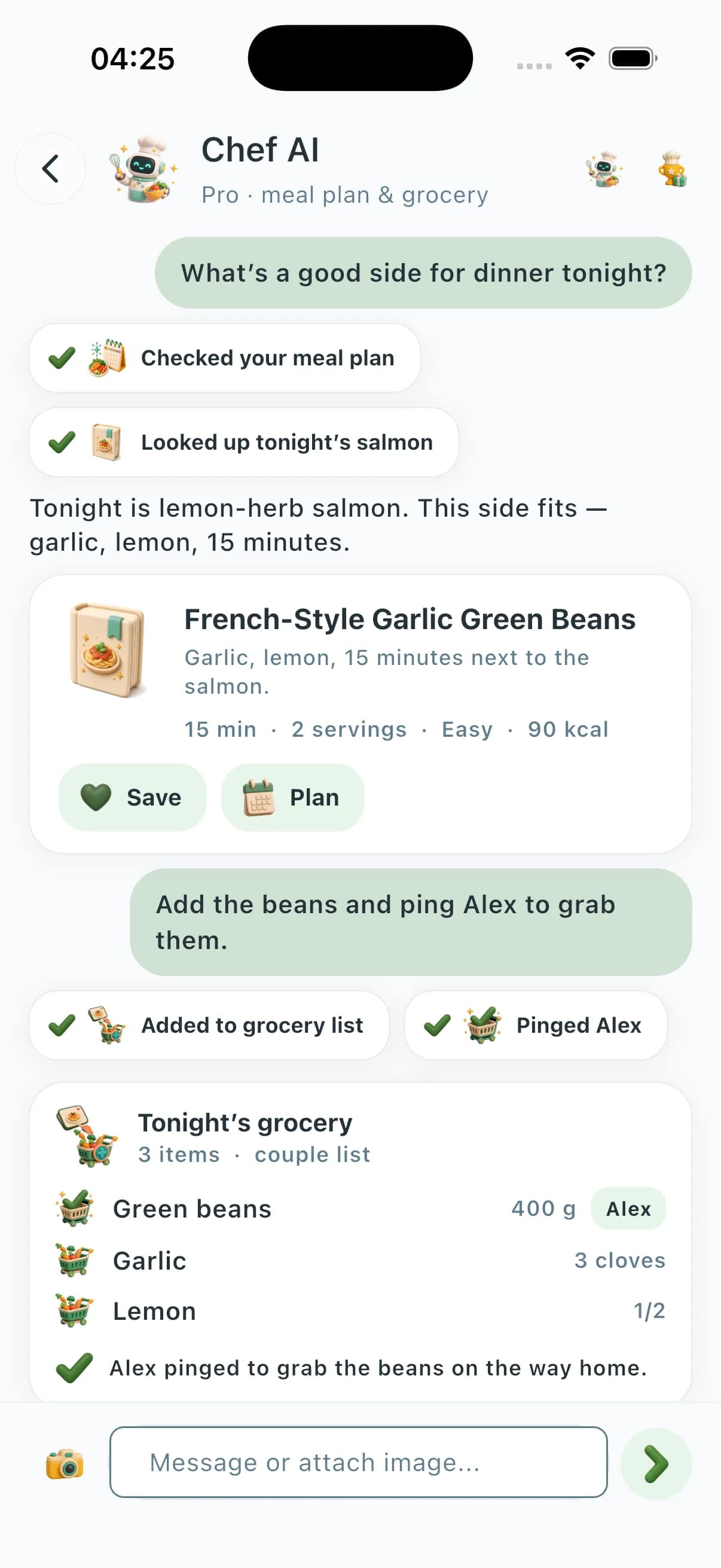


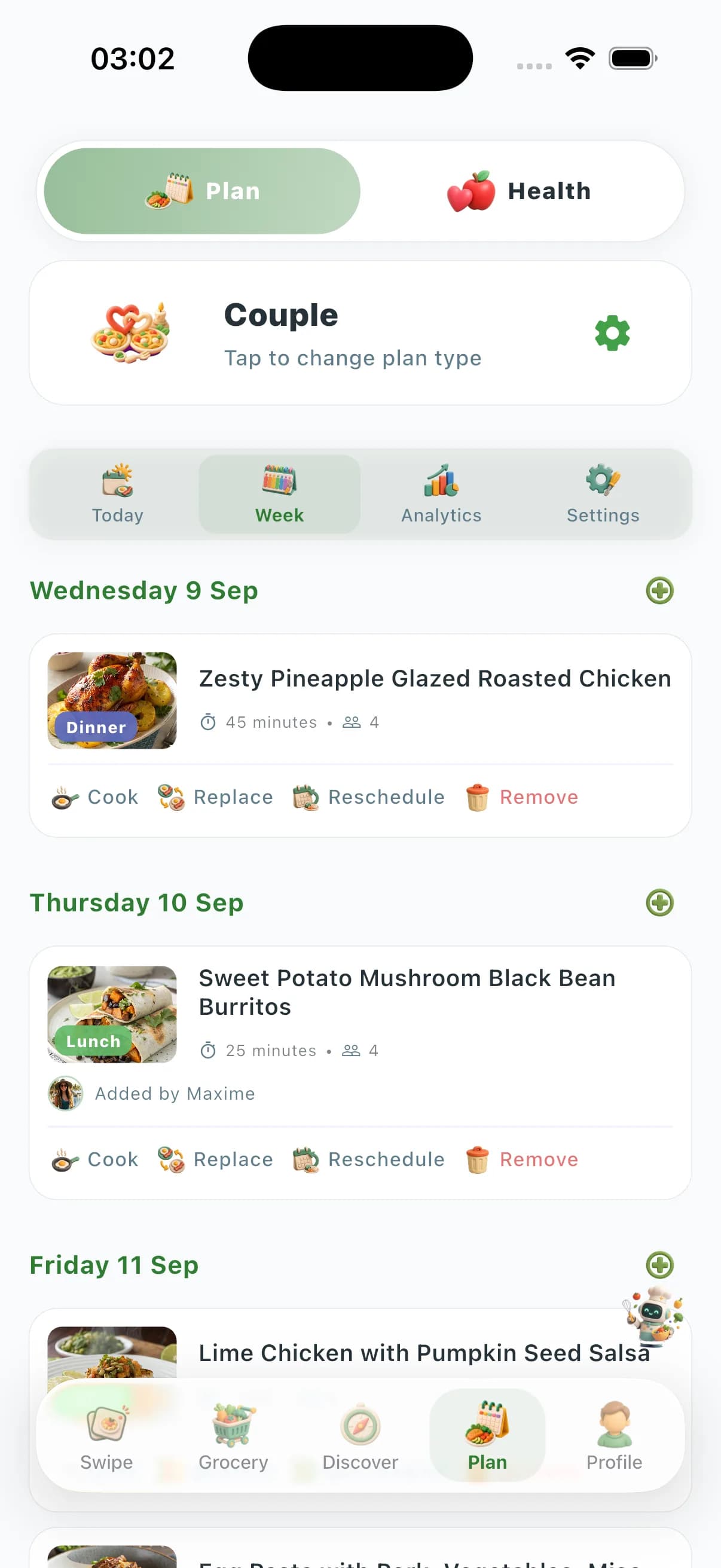
ChefSphere is a managed vertical food SaaS API platform: ~7,000 proprietary structured recipes with native content in five languages (EN/FR/DE/ES/AR), plus household-aware meal planning, marketplace commerce, live streaming, ebooks, community, identity, and infrastructure—billed with prepaid tokens. Spoonacular is a recipe, ingredient, and nutrition data API with points-based quotas: you still own auth, planning logic, payments, streaming, and community. This page compares product scope for teams shipping food products.
| Capability | ChefSphere | Spoonacular |
|---|---|---|
| Product model | Managed vertical food SaaS APIs—product surfaces, not only data lookup | Recipe, ingredient, and nutrition data API with points-based quotas |
| Recipe content | ~7,000 proprietary structured recipes; native EN/FR/DE/ES/AR | Recipe/nutrition data responses; application layer stays on you |
| Meal planning depth | Plans, households, preferences, grocery workflows as first-class APIs | Meal-plan helpers on top of recipe/nutrition data; not a household SaaS layer |
| Commerce, streaming & creators | Marketplace, live streaming, ebooks, community, and seller identity APIs | Outside Spoonacular’s recipe/nutrition data scope |
| Quotas & commercial model | Prepaid tokens via early access (packs from $29) | Points-based quotas per API usage |
| Infrastructure & identity | Auth, infra, and compliance surfaces for food/creator SaaS | Bring your own auth, storage, payments, and moderation stack |
Meal planning depth
ChefSphere exposes managed meal-planning APIs built for real households: shared plans, member preferences, and grocery-oriented workflows as part of the platform. Spoonacular can return recipe and nutrition payloads you wire into a planner UI, but household product logic—multi-member preferences, weekly workflows, grocery lists—still lives in your backend.
Recipe & data API scope
ChefSphere ships ~7,000 proprietary structured recipes with native EN/FR/DE/ES/AR content—allergen-aware, diet- and cost-ready—as one surface among managed food SaaS APIs. Spoonacular is a points-quota recipe, ingredient, and nutrition data API: useful for lookup, without meal planning, marketplace, live, community, or identity product surfaces.
Commerce, community & creators
ChefSphere adds marketplace tools, live cooking streams, ebook commerce, community feeds, and seller/identity onboarding—vertical surfaces food and creator products usually wire from scratch. Spoonacular stops at food data; those adjacent product APIs are ChefSphere’s territory.
Product model & billing
ChefSphere sells managed SaaS access via early access with prepaid token packs from $29—one balance across recipes, meal planning, marketplace, streaming, ebooks, community, and infra. Spoonacular meters usage with points-based quotas: more calls and heavier endpoints spend points. Product teams pick ChefSphere when they want prepaid tokens and product APIs, not a data-only pipe.
FAQ
- Why choose ChefSphere over Spoonacular?
- Choose ChefSphere when you need managed food SaaS APIs—not only recipe and nutrition lookup. You get ~7,000 proprietary structured recipes (native EN/FR/DE/ES/AR), household meal planning, marketplace, live streaming, ebooks, community, and identity on prepaid tokens. Spoonacular is a points-quota data API; the application layer stays on you.
- How does billing differ?
- Spoonacular uses points-based quotas tied to API usage. ChefSphere uses prepaid token packs from $29 once early access is granted, shared across modules. Unused tokens stay on your balance instead of resetting with opaque overages.
- Does ChefSphere include meal planning and product APIs?
- Yes. Household-aware meal planning, grocery workflows, marketplace commerce, live streaming, ebooks, community, and identity are first-class ChefSphere API surfaces—alongside the proprietary recipe catalog—not glue you assemble around a data endpoint.
- What recipes does ChefSphere ship?
- Roughly seven thousand proprietary structured recipes with native content in five languages (EN/FR/DE/ES/AR), allergen awareness, diet and macro facets, cost and timing summaries, plus cultural, seasonal, and health context—ready for product screens.
- When is ChefSphere the better buy?
- When you are shipping a food product and want a proprietary structured recipe database plus managed product APIs—planning, commerce, live, and social—on prepaid tokens. Spoonacular remains a points-quota data API: you still build the product.
Verdict
Choose ChefSphere when you need managed food SaaS APIs beyond recipe data—~7,000 proprietary structured recipes, household meal planning, marketplace, live streaming, ebooks, community, and identity on prepaid tokens. Spoonacular remains a points-based recipe, ingredient, and nutrition data API without those product surfaces.
Related API resources
- Spoonacular alternative guide — developers SEO guide + early access
- Recipe database API — structured recipes for food apps
- Nutritionix alternative guide — barcode / NL nutrition vs product APIs
- Developers hub — platform modules and early access
- API docs — documentation and onboarding path
- ChefSphere vs Edamam — another food data API comparison