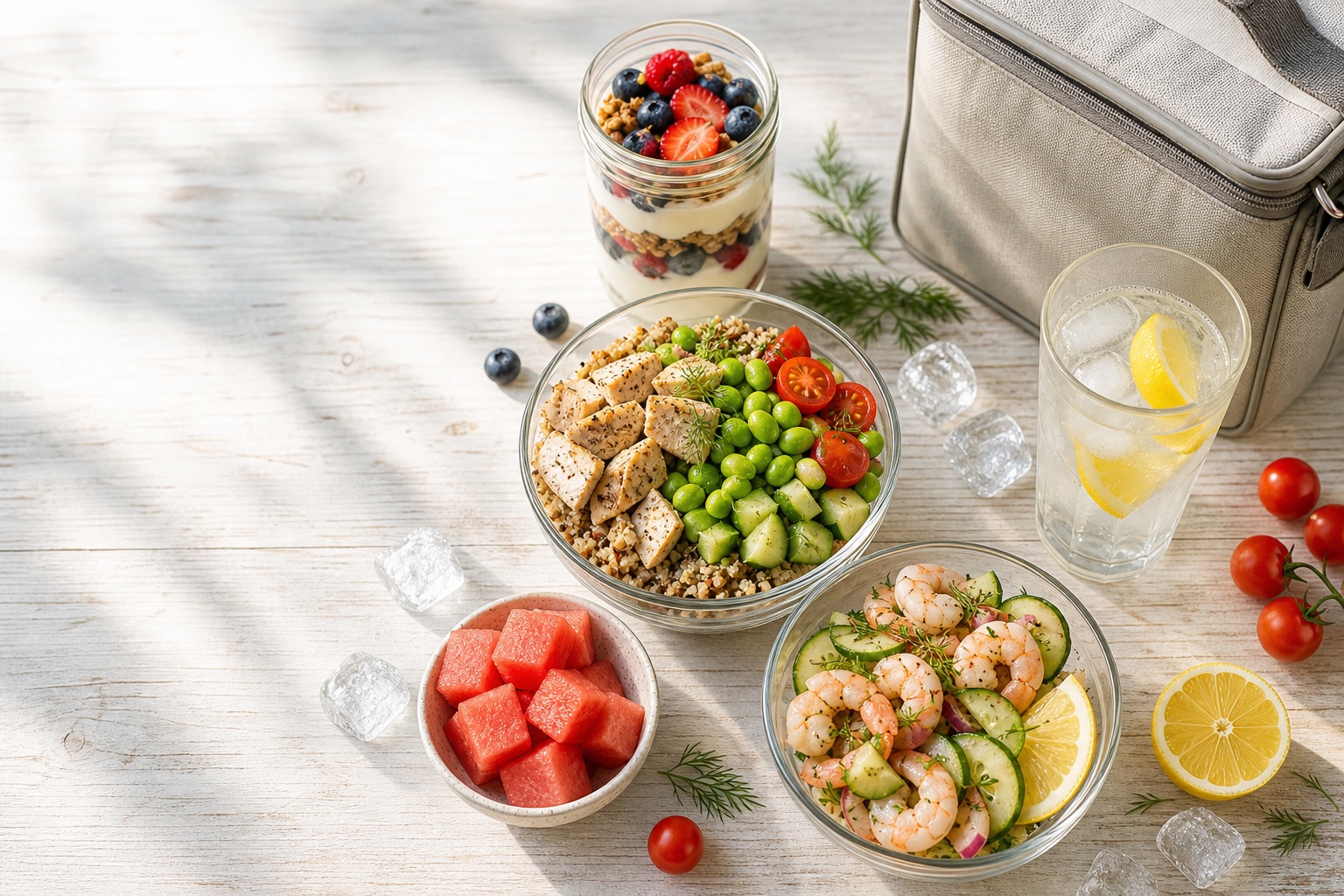
Summer is supposed to be the easy season for eating well — fresh produce, light meals, long evenings. But if you are on a GLP-1 medication like Ozempic, Wegovy, Mounjaro, or Zepbound, summer quietly stacks the deck against you. The same heat that kills everyone else's appetite lands on top of a drug that already kills yours. The result is days where you barely eat, barely drink, and slowly lose the muscle you are trying to protect.
This guide is a practical, cold-meal summer plan for GLP-1 users: how to hit your protein target when you are not hungry, how to stay hydrated when you do not feel thirsty, and how to keep your medication safe in the heat. It is information, not medical advice — your clinician knows your situation best, so use this to have a smarter conversation with them.
Why summer is uniquely hard on GLP-1 users
GLP-1 medications work in part by slowing how fast your stomach empties and by signaling fullness to your brain. That is the point — it is why they curb appetite so effectively. Add summer heat and two things happen at once.
First, heat suppresses appetite on its own. Your body diverts blood to the skin to cool down, digestion slows, and a hot afternoon makes a heavy plate feel unappealing. Stacked on a medication that already flattens hunger, many users report going most of the day without a real meal.
Second, heat plus slowed digestion speeds dehydration. You lose fluid through sweat, but the drug blunts your thirst signal, so you do not reflexively reach for water. Slower gastric emptying means fluids and food linger, which can also make nausea worse on a hot day. It is a quiet feedback loop: less appetite leads to less food and drink, which leads to fatigue and stronger side effects, which leads to eating even less.
The fix is not willpower. It is structure — cold meals you can face, fluids on a schedule, and a protein number you hit by design rather than by hunger.
The three summer risks
1. Dehydration. This is the most urgent. GLP-1 users are already prone to lower fluid intake; summer sweat plus blunted thirst makes it worse. Mild dehydration shows up as headaches, dizziness, fatigue, and — frustratingly — more nausea.
2. Muscle loss. Rapid weight loss always carries the risk of losing lean mass alongside fat. Research on GLP-1 weight loss has shown that a substantial share of the weight lost can come from muscle when protein and resistance training are neglected. Summer's appetite crash makes under-eating protein much easier, which accelerates the problem.
3. Nutrient gaps. When total food intake drops, so does your intake of fiber, vitamins, and minerals. Living on iced coffee and a few bites of dinner for weeks leaves real gaps. Cold meals can be just as nutrient-dense as hot ones — but only if you plan them that way.
Your summer protein target
Heat does not lower your protein needs. A common clinician recommendation during GLP-1 weight loss is 1.2-1.6 grams of protein per kilogram of body weight per day, specifically to protect muscle while you lose fat. For a 70 kg (154 lb) person, that is roughly 84-112 g of protein daily.
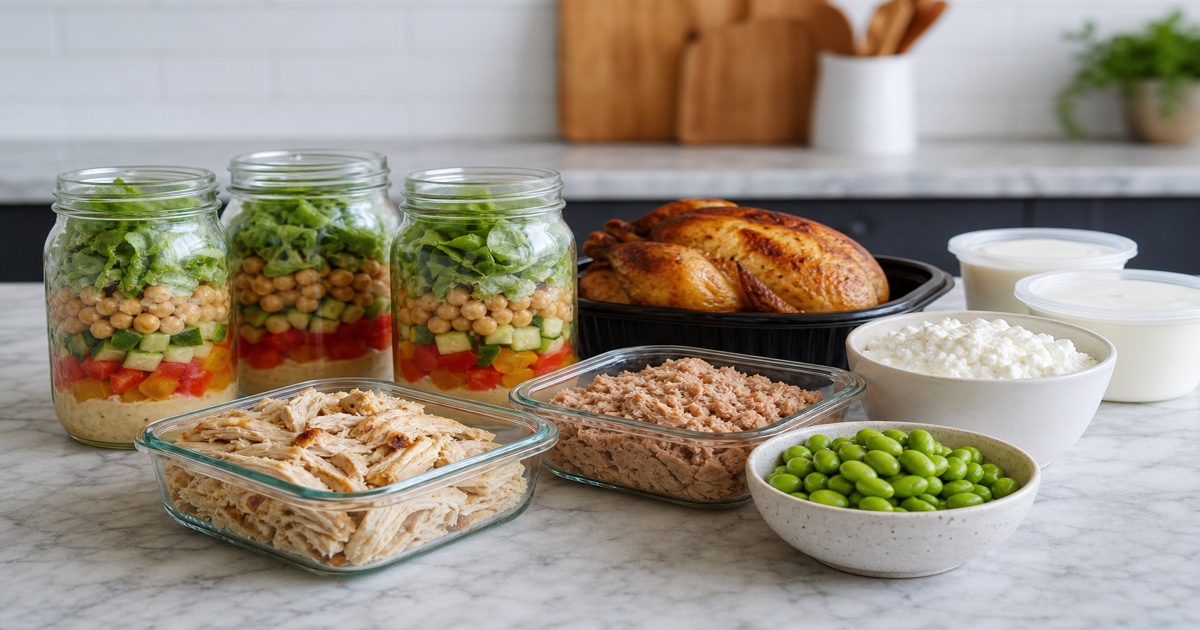
The summer challenge is not the number — it is splitting it across meals when you are not hungry. Three meals of 25-35 g each, plus a protein snack, gets most people there. The trick is making each of those meals cold, small, and protein-first so you can actually finish them. Our high-protein meal prep guide breaks down how to anchor every meal around a protein source.
Hydration and electrolytes
Because the medication blunts thirst, drink on a schedule, not on a craving. A practical summer target is roughly 80-120 oz (2.4-3.5 L) of fluid per day, more if you are active or sweating heavily.
The simplest self-check is urine color: pale straw means you are hydrated; dark amber means drink now. Keep a marked water bottle with you and treat refilling it as a recurring task, not an afterthought.
When you sweat a lot, plain water is not enough — you also lose sodium, potassium, and magnesium. Add electrolytes through a sugar-free electrolyte mix, broth, or naturally electrolyte-rich foods like yogurt, leafy greens, and avocado. Spreading fluids through the day also tends to sit better than chugging a large glass, which can trigger nausea on slowed digestion.
Cold, no-cook, protein-dense meals
The heart of a summer GLP-1 plan is food that requires no oven and goes down easily.
Breakfasts (protein-forward, cold):
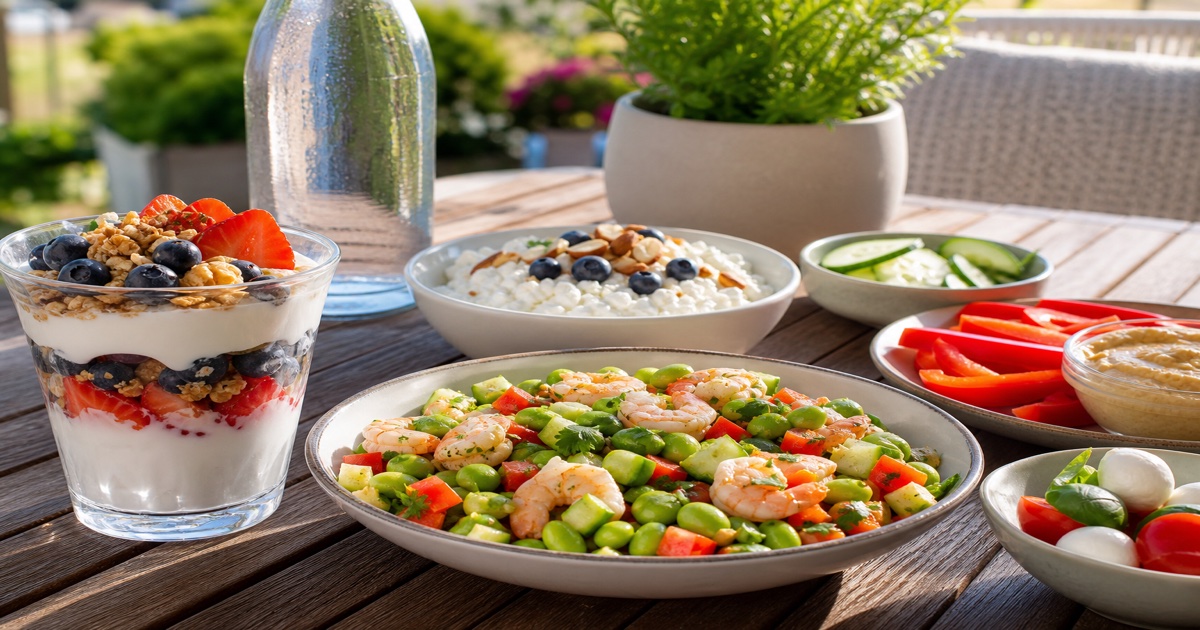
- Greek yogurt parfait — high-protein Greek yogurt, berries, a spoon of granola, chia seeds
- Cottage cheese bowl — cottage cheese with peaches and a drizzle of honey, or savory with tomato and cucumber
- Overnight oats made with milk or yogurt and a scoop of protein
Lunches (cold bowls and jars):
- Cold chicken and edamame bowl — shredded rotisserie or poached chicken, edamame, cucumber, sesame
- Tuna or salmon salad — canned fish, Greek-yogurt-based dressing, on greens or in a wrap
- Pre-cooked shrimp salad — shrimp, avocado, cherry tomatoes, lime
- Mason-jar salads — dressing on the bottom, protein and sturdy veg layered up, greens on top
No-oven dinners:
- Big protein salad — greens, a generous protein, beans, seeds, a real dressing
- Cold soba or grain bowl with tofu or chicken and lots of crunchy vegetables
- Deli-style platter — sliced turkey, cheese, olives, hummus, raw veg, whole-grain crackers
Every one of these is assembled cold and built protein-first. For more ready-to-go ideas, browse the ChefSphere recipes library.
Small-appetite tactics
On the days the heat wins and you simply are not hungry, switch to protein-first mini meals. Eat the protein portion first while you still have any appetite, then add the rest if you can. Four small 20-25 g protein "snacks" across the day can quietly out-perform three full meals you cannot face.
Other tactics that help:
- Drink your protein when chewing feels like too much — a cold protein shake or kefir smoothie counts.
- Keep grab-and-go protein in the fridge: hard-boiled eggs, single-serve cottage cheese, string cheese, edamame.
- Eat the cooler part of the day — many GLP-1 users do best with a real meal in the morning and evening, and lighter input mid-afternoon.
A sample one-day summer GLP-1 menu
- Breakfast — Greek yogurt parfait with berries and chia (~30 g protein)
- Mid-morning — Cold protein shake or kefir (~20 g protein)
- Lunch — Cold chicken and edamame bowl with sesame (~35 g protein)
- Afternoon — Cottage cheese with cucumber and tomato (~14 g protein)
- Dinner — Big shrimp and avocado salad with beans (~30 g protein)
- All day — 80-120 oz fluid, electrolytes after any heavy sweat
That lands around 125-130 g of protein without turning on the stove once. Scale the portions to your own target and appetite.
Storing your medication in the heat
Summer logistics matter as much as food. GLP-1 pens are temperature-sensitive.
- Never let them exceed 86°F (30°C). A hot car can blow past that in minutes — never leave a pen in one.
- Keep unopened pens refrigerated at 36-46°F (2-8°C).
- For a beach or pool day, use a small insulated cooler with an ice pack, but keep the pen from touching the ice directly so it does not freeze. A frozen pen must be discarded.
- Always follow the storage and in-use timing instructions from your pharmacy and the medication label.
Training and heat timing to keep muscle
Protein protects muscle best when paired with resistance training. In summer, timing matters: lift in the early morning or evening, not during peak afternoon heat, and hydrate around your session. Even two or three short strength sessions a week meaningfully reduces muscle loss during GLP-1 weight loss. Pair this with the calorie-deficit meal plan principles so your deficit comes from fat, not lean mass.
Vacation and travel eating
Travel is where summer plans fall apart. A few defenses:
- Pack a soft cooler with protein snacks for the car, plane, or beach.
- At hotels, hit a grocery store first for Greek yogurt, cottage cheese, pre-cooked protein, and fruit.
- Restaurants: order protein-first, ask for a cold or grilled option, and split heavy dishes.
- Keep your fluid bottle and electrolytes on you, especially in airports and on long drives.
If you want this handled automatically, see the diet and condition-specific meal plans built for travel weeks.
Let ChefSphere auto-build cold high-protein days
The hardest part of summer on a GLP-1 is not knowing what to eat — it is the daily effort of assembling enough protein when you feel like eating nothing. That is exactly what ChefSphere's AI meal planner is built for. It can prioritize cold, no-cook, high-protein meals during heat waves, hit your daily protein target across small meals, and adapt portion sizes as your appetite shifts week to week. Swipe through summer recipes you actually want, and the AI assembles the days around them — and you can take it with you using the ChefSphere app.
Related reading
- High-Protein Meal Prep — how to anchor every meal around protein
- Calorie-Deficit Meal Plan for Weight Loss — make your deficit come from fat, not muscle
- Diet & Condition Meal Plans — plans tuned to GLP-1 and other needs
- ChefSphere Recipes — browse cold, no-cook, high-protein ideas
Get started: Create a free ChefSphere account. Tell the AI you are on a GLP-1 this summer, and it builds a cold, high-protein week that protects your muscle and keeps you hydrated — in under a minute.


