The school year has a built-in lunch rhythm: you pack the night before, half-asleep, and the cafeteria handles the rest. Then summer arrives and the whole structure disappears. Suddenly you are the cafeteria, the snack bar, and the camp packing station — every single day, on repeat, usually around 11am when someone announces they are starving and you have no plan.
This guide fixes the summer lunch scramble with one repeatable formula, a five-template rotation you reuse all season, real heat-safety rules most parents skip, and a copy-this 7-day no-cook plan. No oven, no daily decision fatigue, and no inventing something new every morning.
Why summer lunch feels harder than school lunch
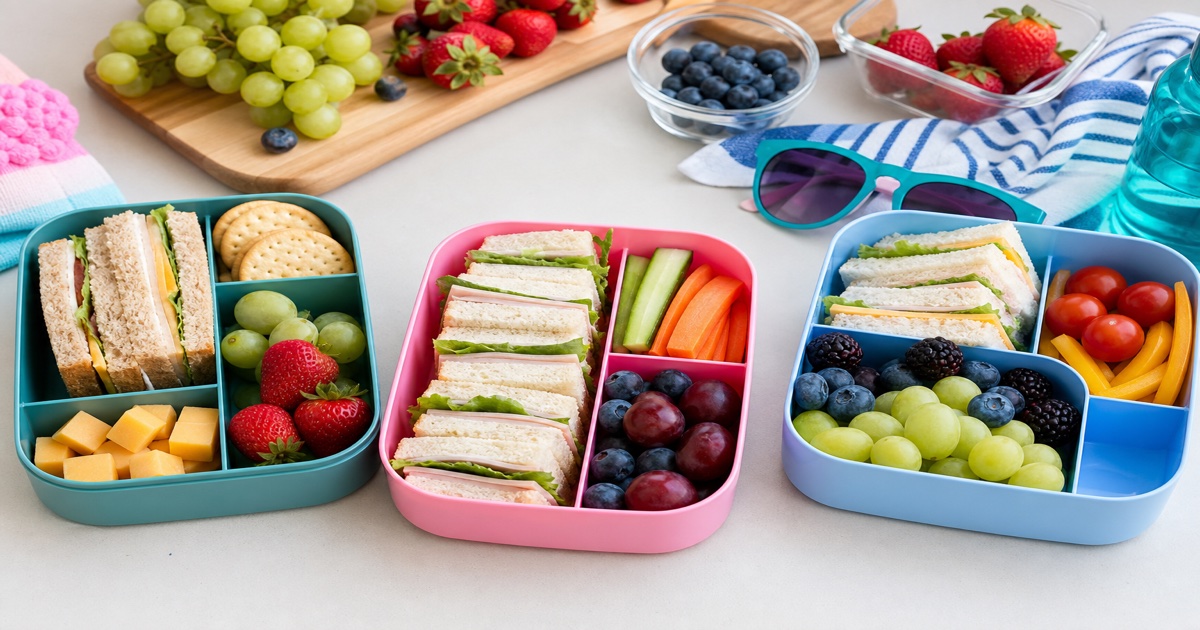
During the school year, lunch is outsourced and time-boxed. In summer, three things collapse at once: the schedule disappears, the kids are home watching you cook, and the heat makes half your usual go-to foods unsafe to pack. The result is the 11am scramble — that daily moment where hunger arrives before any plan does, and you end up assembling something random while three kids hover.
The fix is not more recipes. It is fewer decisions. When lunch becomes a system instead of a daily invention, the scramble disappears. You stop asking "what should I make?" and start asking "which of my five builds today?"
If picky eaters are part of your summer chaos, our guide on family meal planning with picky eaters pairs perfectly with everything below — the boundaries and exposure strategies there apply directly to summer lunches.
The only formula you need
Every good kid lunch is the same shape: 1 protein + 1 fruit or veg + 1 carb. That is it. Once you internalize the formula, you never plan a lunch again — you assemble one from three short lists. Keep the lists visible on the fridge and let kids choose one from each column. Choice is the secret to fewer refusals.
Protein (pick one):
- Turkey or ham roll-ups
- Cheese cubes or string cheese
- Hard-boiled eggs
- Hummus or bean dip
- Nut or sunflower-seed butter
- Yogurt (kept cold)
Fruit or veg (pick one):
- Grapes, berries, or apple slices
- Whole orange, banana, or clementine
- Cucumber sticks or cherry tomatoes
- Baby carrots or snap peas
- Bell pepper strips
Carb (pick one):
- Crackers or pretzels
- Whole-grain roll or pita
- Tortilla (for roll-ups)
- Rice cakes
- Pasta salad portion
Three columns, dozens of combinations, zero daily planning. The formula does the thinking so you do not have to.
Build a five-template rotation
Even with the formula, decision fatigue creeps in. So pre-decide five complete builds and rotate them all summer. Five is the sweet spot — enough variety that nobody revolts, few enough that grocery shopping stays automatic.
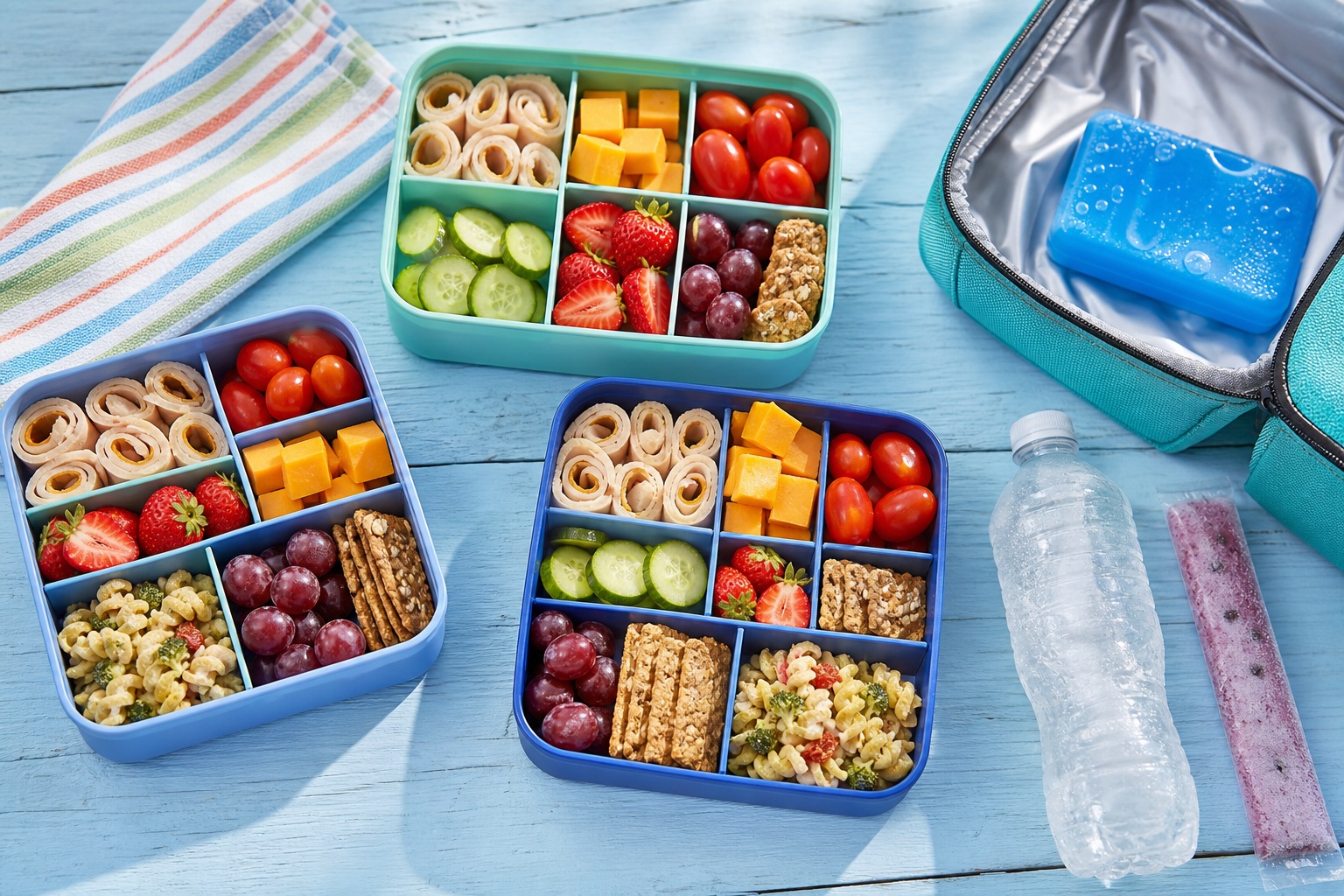
- The Classic Bento — turkey roll-ups, cheese cubes, crackers, grapes
- The Dipper — hummus, pita triangles, cucumber, cherry tomatoes, apple slices
- The Pasta Box — cold pasta salad, cheese, baby carrots, berries
- The Roll-Up — tortilla with cream cheese and ham, bell pepper strips, clementine
- The Snack Plate — hard-boiled egg, pretzels, snap peas, string cheese, banana
Rotate without burnout by swapping just one component when boredom hits — same template, new fruit. The structure stays; the details flex. Browse our recipe library when you want fresh component ideas to slot into any of the five.
Heat-safe packing: the rules parents skip
This is the part most summer guides ignore, and it matters more in June than in January. Bacteria multiply fastest between 5C/41F and 60C/140F. A lunch packed at 8am and eaten at 1pm has had five hours to warm up in a backpack on a hot day.
The core rule: keep cold food below 5C/41F until it is eaten.
How to actually do it:
- Use an insulated bag, not a paper sack. Soft-sided insulated lunch bags are cheap and make a real difference.
- Add two cold sources, not one. One frozen gel pack plus a free second source.
- Free ice pack #1: a frozen yogurt tube. It keeps everything cold on the way and thaws into a snack by lunch.
- Free ice pack #2: a half-frozen water bottle. Freeze it two-thirds full the night before, top with water in the morning — it chills the bag and becomes a cold drink.
- Keep the bag in the shade. Never leave it in a hot car or in direct sun on the pool deck.
Never pack on hot days: warm mayo-based salads, dairy that will sit unrefrigerated, or anything cooked-and-cooled that cannot stay cold. On a 30C/86F pool afternoon, lean on dry, sturdy, shelf-stable foods — crackers, whole fruit, hard cheese, nut butter — and save the yogurt for cooler days or shorter trips.
The 7-day no-cook summer lunch plan
Copy this. Every lunch uses the formula, every item is no-cook, and everything packs cold-safe with two ice sources.
- Monday — Turkey roll-ups, cheese cubes, crackers, grapes
- Tuesday — Hummus, pita triangles, cucumber sticks, apple slices
- Wednesday — Cold pasta salad, string cheese, baby carrots, berries
- Thursday — Ham-and-cream-cheese tortilla roll, bell pepper strips, clementine
- Friday — Hard-boiled egg, pretzels, snap peas, banana, yogurt tube (frozen)
- Saturday — Sunflower-butter and jam on a whole-grain roll, cherry tomatoes, orange
- Sunday — Snack plate: cheese, crackers, salami, cucumber, grapes (a relaxed "lunchable" at home)
Seven days, zero cooking, infinite re-runs. When week two arrives, swap one component per day and you have a brand-new plan that took zero new decisions.
Camp vs pool vs home tweaks
Same formula, three contexts:
- Camp: Maximum durability. Pack whole fruit (it survives a thrown backpack), add both ice sources, and skip anything that needs utensils your kid will lose. Label everything.
- Pool: Heat is the enemy and hands are wet and chlorinated. Favor finger foods in sealed containers, lean dry and shelf-stable, and keep the bag in shade — never on the hot deck.
- Home: You have a fridge, so this is your chance to use the more perishable builds — yogurt bowls, the dipper plate, anything dairy-forward — without worrying about the cold chain.
Make-ahead in 20 minutes on Sunday
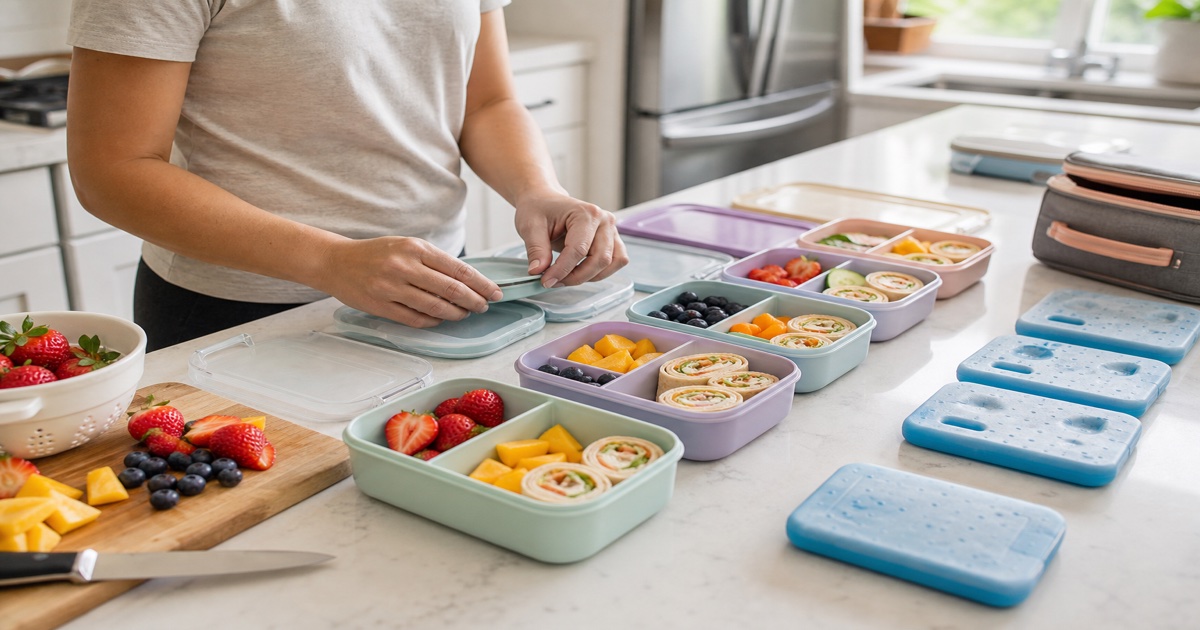
You do not meal-prep summer lunches — you component-prep them. Twenty minutes on Sunday makes every weekday morning a two-minute assembly job.
Batch two or three components:
- Wash and portion fruit into grab containers (grapes, berries, washed apples)
- Cut veggie sticks (cucumber, carrots, peppers) and store in water to stay crisp
- Portion crackers, pretzels, and cheese into reusable cups
- Hard-boil a half-dozen eggs
- Mix one batch of pasta salad for two lunches
Most components keep three to four days refrigerated. Each morning you just grab one protein, one fruit/veg, one carb, drop in two ice sources, and you are done. Plan your week and your batch list in one place with ChefSphere's meal planning.
Let kids build their own
The single biggest reducer of lunch refusals is independence. A child who builds their own lunch eats it. Set out the three columns — proteins, fruits/veg, carbs — and let them assemble within the rules. They get control; you get a kid who eats what is in the box because they chose it.
This works because it removes the power struggle entirely. You are not negotiating; you are offering a structured menu. Younger kids love it as a game; older kids appreciate the autonomy. Either way, you are out of the daily decision loop.
Let ChefSphere generate the rotation and grocery list
If building the five-template rotation and a matching shopping list sounds like one more job, hand it off. ChefSphere's AI meal planner builds a kid-friendly summer lunch rotation around your family's preferences, then turns it into an organized grocery list automatically — so restocking your five builds is a single tap, not a weekly brainstorm.
Swipe through lunch ideas, save the ones your kids actually like, and the AI learns the pattern. Over a summer, it gets sharper every week — fewer refusals, less waste, and no more 11am scramble. Download the app to take the rotation with you to camp and the pool.
Summer lunch, finally on autopilot
The whole trick is replacing daily invention with a reusable system: one formula, five builds, real cold-chain rules, and kids who assemble their own. Set it up once and the rest of summer runs itself.
Get started: Create a free ChefSphere account. Swipe through kid-friendly summer lunches and let the AI build your rotation and grocery list in under a minute.


