There is a specific summer sound every parent knows: the fridge door opening for the ninth time before lunch. School's out, the schedule is gone, and suddenly your kids treat the kitchen like a 24-hour buffet. By 11am they have "snacked" their way through what should have been three meals, and by dinner nobody is hungry — except now they want a snack.
This is not a discipline problem. It is a structure problem, and structure is fixable. This guide gives you a simple summer eating rhythm — three meals plus two planned snacks — a self-serve snack station that runs without you, the one boundary that saves your summer, and easy hot-weather dinners that beat all-day grazing. Plus a copy-paste one-week plan.
Why kids eat nonstop in summer
During the school year, eating is on rails. Breakfast at 7, lunch at noon, a snack after pickup, dinner at 6. Kids are not asking for food constantly because the schedule answers the question for them. Then summer removes the schedule, and without external structure, "Am I hungry?" becomes "Is there food?" — and the answer is always yes, because the fridge is right there.
The grazing that follows feels like constant hunger but is usually boredom, habit, or thirst wearing a hunger costume. And it backfires: a child who nibbles all afternoon has no appetite for dinner, picks at the real meal, and then — predictably — is "hungry" again at 8pm. The fix is to rebuild the rails summer took away.
The summer eating rhythm: 3 meals + 2 snacks
The whole system is one line: three meals and two planned snacks, at roughly the same times each day. That is the rhythm that replaces the lost school schedule.
A sample summer day:
- 8:00 — Breakfast
- 10:30 — Morning snack
- 12:30 — Lunch
- 3:00 — Afternoon snack
- 6:00 — Dinner
The magic word is planned. There is a world of difference between structured snacking (a real snack, sitting down, at a known time) and grazing (a handful of this, a nibble of that, all day, standing at the counter). Structured snacking bridges kids to the next meal. Grazing wrecks dinner, because a stomach topped up every forty minutes never gets hungry enough to eat a proper meal — and the meal you cooked is the one with the vegetables.
Two snacks at set times means kids learn that food comes on a schedule, just like during the school year. The constant asking fades within a week because the answer becomes predictable.
"The kitchen is closed" — the one boundary that saves your summer
Here is the single most powerful tool in the whole plan: between meals and snacks, the kitchen is closed. One clear boundary, stated the same way every time, ends most of the negotiation.
The script: when a kid asks for food ten minutes after a snack, you say "Water now, next snack at 3." Calm, consistent, not up for debate. You are not saying no forever — you are saying not yet, with a specific time attached so it does not feel like a rejection. Kids relax when they know exactly when the next food is coming.
The protein bridge exception. Sometimes hunger is real, especially on a high-activity pool day. The test: offer a small, plain protein — cheese, a hard-boiled egg, plain yogurt. Genuine hunger happily eats plain protein. Boredom says "no thanks" and wanders off. This one move lets you honor real hunger without opening the floodgates to cookies-on-demand. (For the deeper version of holding boundaries without battles, see our guide on family meal planning with picky eaters.)
Build a self-serve snack station kids use without you
The boundary works even better when kids can serve themselves the right things. A self-serve snack station turns "Mom, can I have a snack?" into them quietly handling it — within limits you set once.
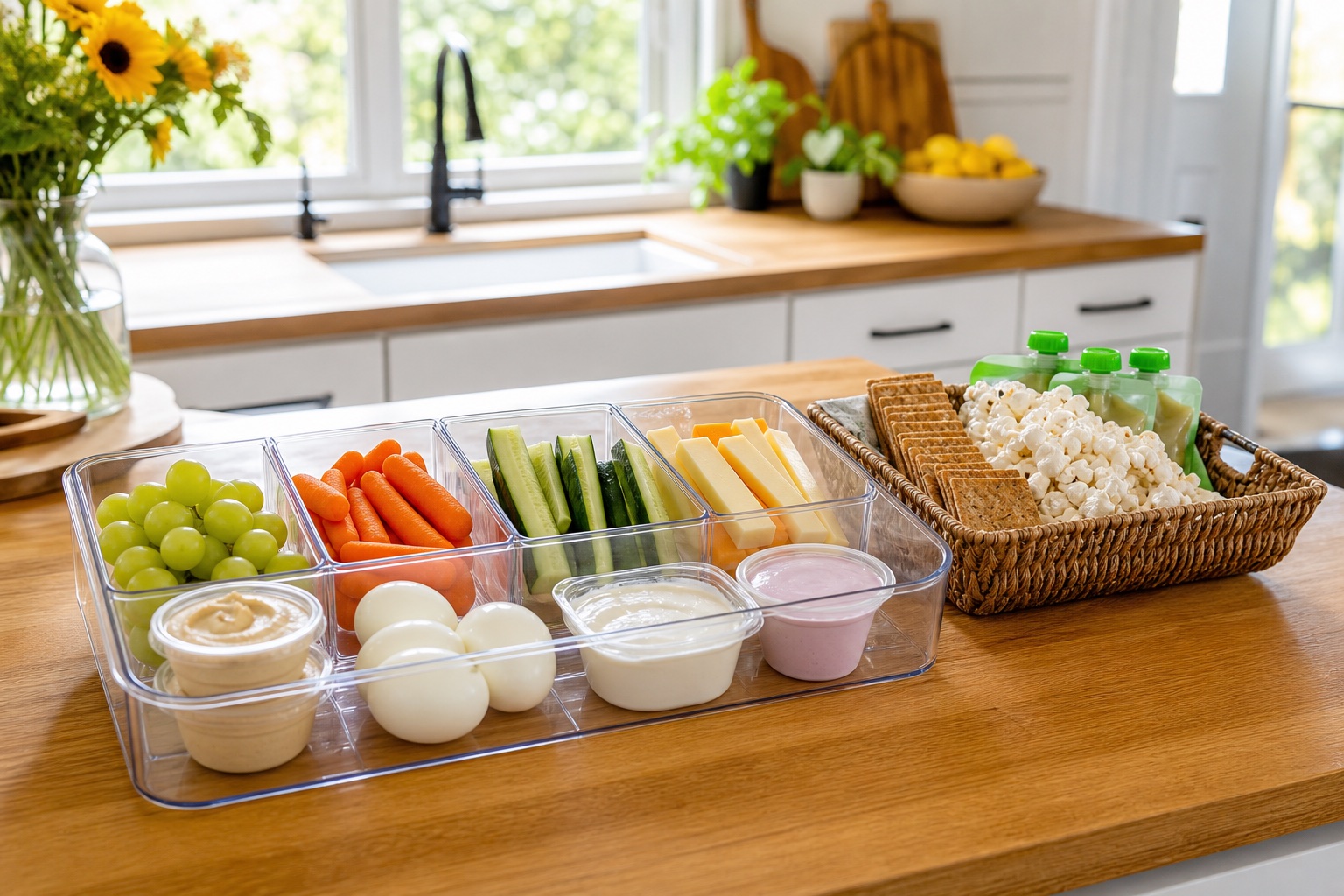
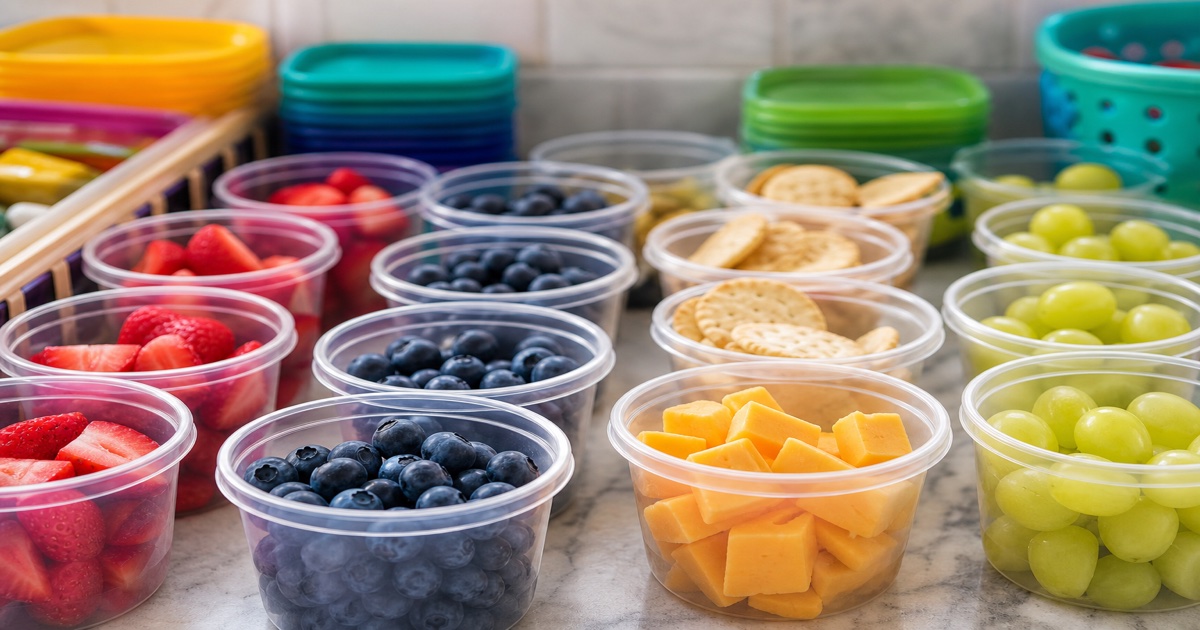
The fridge bin: a single low, kid-height bin in the fridge holding pre-approved, ready-to-eat options — cheese sticks, yogurt, cut fruit, hummus cups, baby carrots. Anything in the bin is fair game at snack time.
The pantry shelf: a low shelf with the dry options — crackers, pretzels, raisins, popcorn, rice cakes. Again, anything on the shelf is allowed.
The "two food groups" rule: every snack must combine two groups, ideally one with protein or fat. Crackers and cheese. Apple and peanut butter. Yogurt and berries. This single rule is what makes a snack actually filling instead of a sugar blip that leaves them hungry in twenty minutes. Post the rule on the fridge as a picture chart for pre-readers.
The station gives kids autonomy inside the boundary. They are not asking you; they are choosing from options you already approved. That is independence without chaos. Pull snack ideas from our recipe library to keep the bins interesting.
Decide lunch before 10:30am
Lunch is where the day either holds together or falls apart. Decide it early — before the morning snack — and you remove the noon scramble entirely. A weekly default rhythm makes this automatic:
- Monday — Sandwich day
- Tuesday — Quesadilla day
- Wednesday — Leftovers day
- Thursday — Snack-plate lunch (build-your-own)
- Friday — Pasta-salad day
When lunch is pre-decided by the day of the week, you are never standing at the fridge at 12:25 with three hungry kids and no plan. The default does the deciding; you just execute. Map the whole week in one place with ChefSphere's meal planning.
Easy summer family dinners that don't heat the kitchen
Dinner in July should not mean standing over a hot stove. These formats feed a family with little or no cooking:
- Component bowls: set out a cold grain (rice, quinoa, pasta), a protein (rotisserie chicken, beans, canned tuna), and toppings (cheese, avocado, corn, salsa). Everyone builds their own bowl. Zero arguments, because each kid controls their plate.
- Snack-board dinners: a big board of cheese, cured meat, crackers, fruit, raw veg, and a dip. It feels like a treat, needs no stove, and quietly hits several food groups.
- Big party subs: build one long sandwich on a baguette, then slice into portions. Feeds the whole family, no heat, minimal cleanup.
All three keep the kitchen cool, let kids assemble their own plate (which means fewer refusals), and take less time than a single hot recipe. Browse more no-heat ideas in our recipes.
Copy-paste 1-week summer meal + snack plan
Here is a full week using the rhythm. Snacks follow the two-food-groups rule; dinners stay low-heat.
- Monday — B: yogurt + granola · S: apple + peanut butter · L: turkey sandwich, grapes · S: cheese + crackers · D: build-your-own taco bowls
- Tuesday — B: scrambled eggs + toast · S: cheese stick + orange · L: quesadilla, cucumber · S: hummus + carrots · D: snack-board dinner
- Wednesday — B: overnight oats + berries · S: yogurt + banana · L: leftovers · S: pretzels + cheese · D: cold pasta salad with chicken
- Thursday — B: smoothie + toast · S: crackers + cheese · L: snack-plate (egg, crackers, fruit) · S: popcorn + raisins · D: big party sub, cut to share
- Friday — B: yogurt parfait · S: apple + cheese · L: pasta salad · S: carrots + hummus · D: build-your-own grain bowls
- Saturday — B: pancakes (weekend treat) · S: grapes + cheese · L: grilled cheese, tomato · S: yogurt tube + berries · D: snack-board + fruit
- Sunday — B: eggs + fruit · S: crackers + peanut butter · L: leftovers cleanup · S: smoothie · D: component bowls + prep for the week
Reuse this every week — swap one snack or one dinner format when boredom hits and it feels brand new.
Make it run itself with AI
Building the rhythm once is easy; keeping it stocked week after week is the grind. Hand that part off. ChefSphere's AI meal planner builds a kid-friendly summer plan — three meals and two snacks a day — around your family's preferences, then turns it into an organized grocery list so your snack-station bins and dinner formats are always stocked.
Swipe through meal and snack ideas, save the ones your kids actually eat, and the AI learns the pattern, refining the plan every week. Download the app to keep the rhythm with you at home, at camp, and on pool days.
A calmer kitchen all summer
The all-day "I'm hungry" is not a willpower battle — it is a missing schedule. Give the summer back its rails: three meals, two planned snacks, a closed kitchen between them, a self-serve station, and low-heat dinners kids build themselves. Set it up once and the grazing stops.
Get started: Create a free ChefSphere account. Swipe through kid-friendly summer meals and snacks, and let the AI build your weekly plan and grocery list in under a minute.


