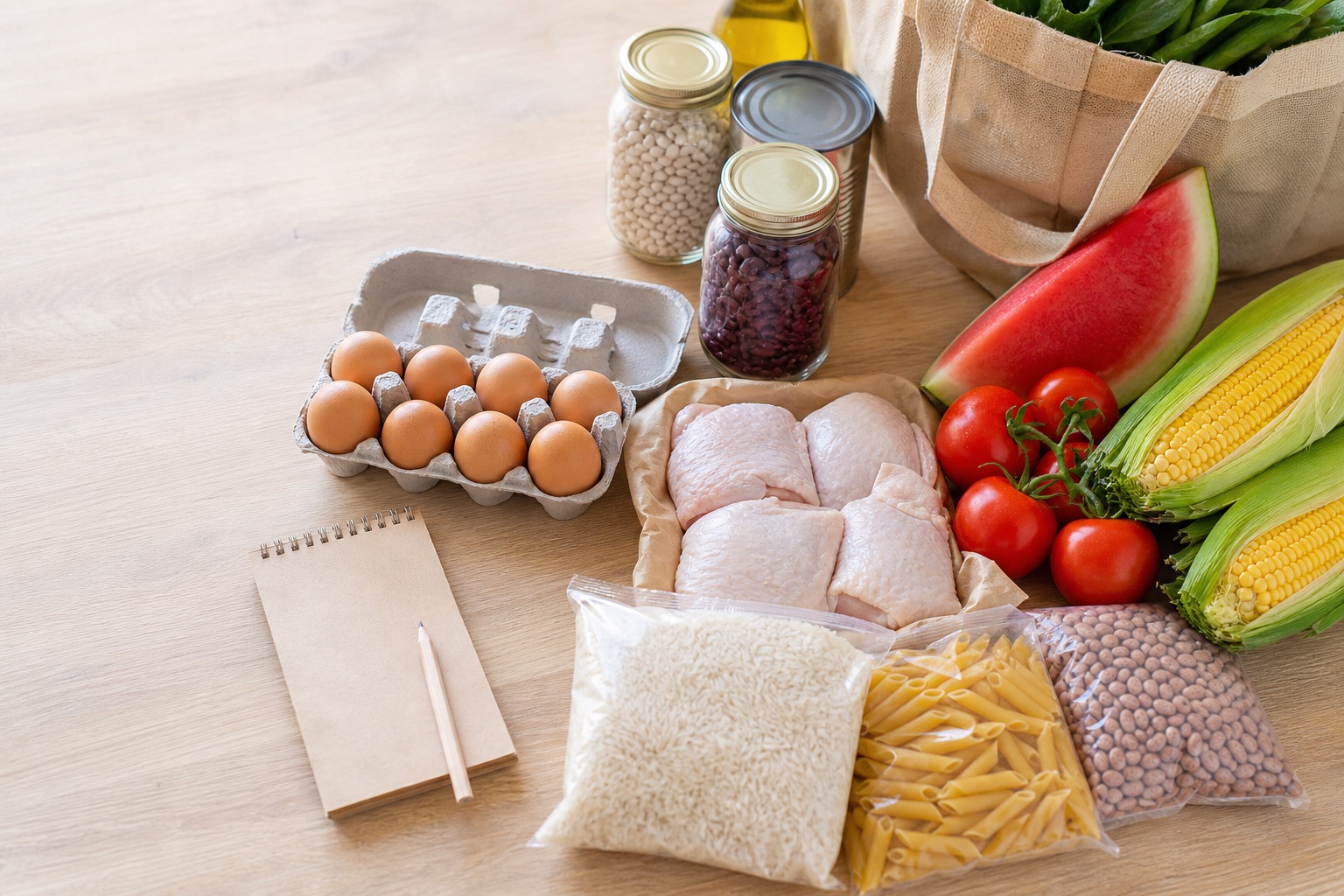
Summer feels like it should be the cheap season. The garden is overflowing, the farmer's market is loud and full, and nobody wants a heavy braise in 90-degree heat. Yet for a lot of households, the summer grocery bill quietly creeps up, not down. School is out, the grill is going, and the people who eat at your table somehow multiply on weekends.
The good news: summer is genuinely one of the easiest seasons to eat well for very little money — if you plan around what is cheap instead of what is convenient. This is a full 7-day summer meal plan built for two people on about $75 a week, leaning on peak produce, cheap proteins, and dinners that barely touch the stove.
Why summer food costs creep up
There is a "summer premium" most people never name. Kids are home, so the easy lunches at school turn into three home meals a day. Grilling and entertaining mean bigger cuts of meat, more drinks, and more guests. And late summer is when a lot of price increases land on the shelf.
The latest numbers back this up. Food-at-home prices are running about +3.2% year over year — moderate, but it compounds on top of several years of elevated prices. Within that average, the items summer leans on hardest are rising fastest: fresh vegetables are forecast up about +7.8%, and beef is up roughly +12.1%. The classic backyard burger-and-salad cookout is sitting right in the path of the biggest increases.
The relief comes from the other side of the basket. Eggs and dairy have been trending down, which makes them some of the best value protein on the shelf this summer. The strategy almost writes itself: lean away from the categories that are spiking, and lean hard into the ones that are cheap and seasonal.
Lean on what's cheap in summer
Two things are cheap in summer, and they happen to make great meals together.
Peak-season produce. When a crop hits peak local supply, the price drops hard — in-season produce typically runs 30-50% cheaper than the same item out of season. In summer that means zucchini, tomatoes, corn, cucumbers, peppers, peaches, berries, and melons. Buying these in season is how you beat that +7.8% fresh-vegetable forecast: the seasonal discount more than cancels the inflation.
Cheap proteins. You do not need steak to eat well. The four workhorses of a summer budget are:
- Eggs — trending down in price, endlessly flexible, perfect for no-fuss dinners
- Canned tuna — shelf-stable, protein-dense, and ready in seconds for salads and pasta
- Dried or canned beans — pennies per serving, filling, and great cold in summer salads
- Chicken thighs — far cheaper than breasts, more forgiving on the grill, and full of flavor
Anchor your week on those and let cheap produce do the rest, and the bill stays small without the meals feeling small.
The budget framework
Every dinner in this plan follows the same simple formula:
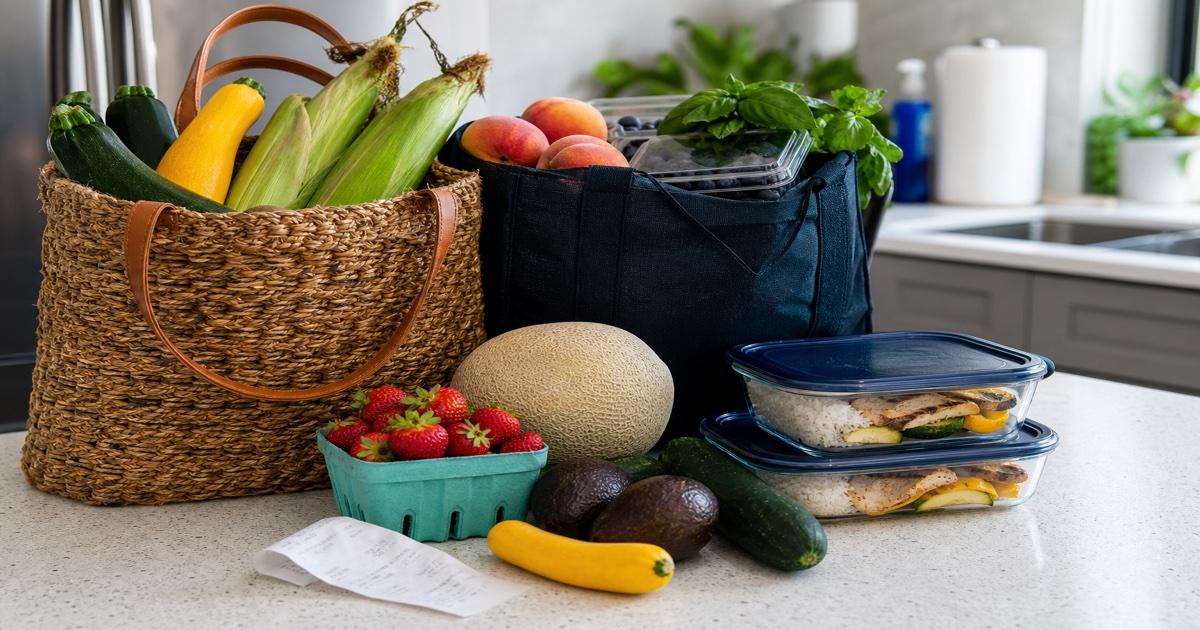
Cheap protein + seasonal vegetable + bulk grain or bread.
That is it. A can of beans, a pile of grilled zucchini, and a scoop of rice is a complete, satisfying meal for under $3 a head. Build on that frame and you can hit endless variety without ever touching the expensive end of the store.
Three rules keep it tight:
- Cook once, eat twice. Roast or grill a double batch of chicken thighs on Sunday and they carry Monday's bowl, Wednesday's wrap, and Friday's salad. Cooking ingredients once and reusing them across the week is the single biggest waste-and-money saver there is.
- Buy grains and beans in bulk. Rice, oats, pasta, and dried beans are the cheapest calories in the store and they never spoil. They stretch every protein dollar further.
- Go no-heat when it's hot. Every meal you make without the oven is a small win on your summer utility bill. No-cook bowls, salads, and wraps keep the kitchen cool and keep costs down.
For the bigger picture on what a household should spend, our grocery budget guide for 2026 breaks down realistic monthly numbers by household size.
The 7-day budget summer meal plan (~$75 for two)
This is dinner-focused, with easy breakfast and lunch anchors that reuse the same cheap ingredients. Everything is built for two; double it for four and the per-person cost barely moves.
Monday — No-heat bean bowl
- Breakfast: Overnight oats with peaches and a spoon of peanut butter
- Lunch: Tuna and white-bean salad with cucumber and lemon
- Dinner: Black bean, corn, and tomato bowl over rice with lime and cilantro — zero stove time
Tuesday — Grill night
- Breakfast: Scrambled eggs with tomato and toast
- Lunch: Leftover bean bowl, dressed up with avocado
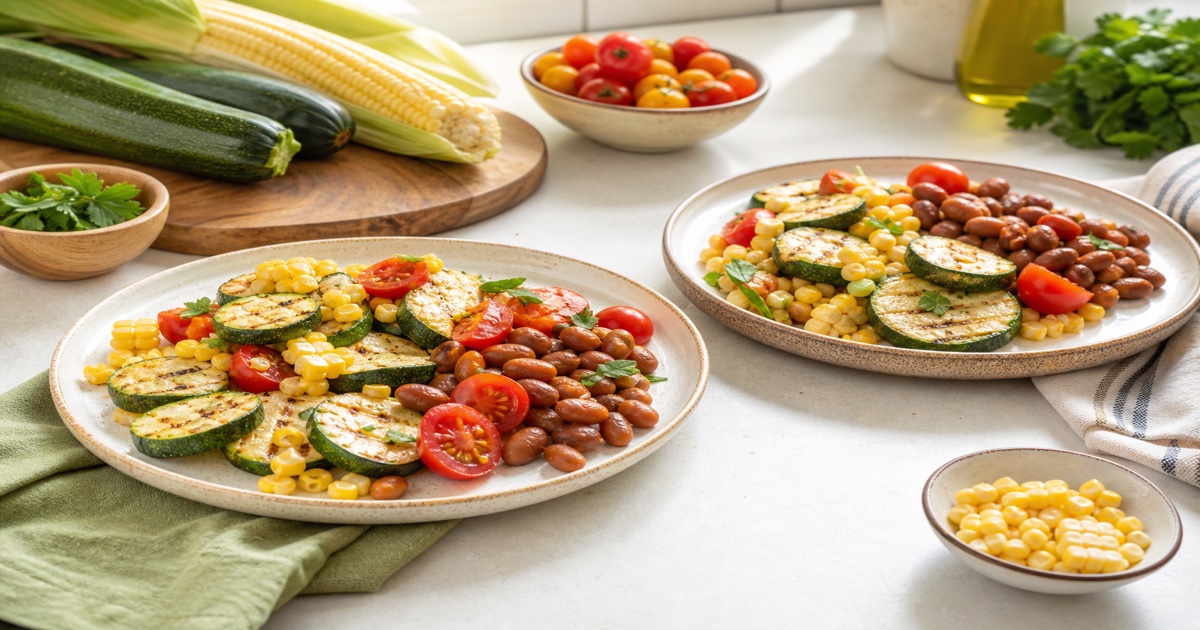
- Dinner: Grilled chicken thighs with grilled zucchini and a corn salad — cook double the thighs
Wednesday — Cool and quick
- Breakfast: Yogurt with berries and oats
- Lunch: Chicken and veggie wrap (Tuesday's extra thighs)
- Dinner: Chilled tomato gazpacho with crusty bread and a fried egg on top
Thursday — Pantry pasta
- Breakfast: Overnight oats with berries
- Lunch: Egg and cucumber sandwich
- Dinner: Tuna pasta with cherry tomatoes, garlic, and olive oil — one pot, ten minutes
Friday — Loaded salad night
- Breakfast: Scrambled eggs with peppers
- Lunch: Bean and corn salad (batch from Monday)
- Dinner: Big chopped salad with chicken thighs, beans, tomato, pepper, and cucumber — no heat
Saturday — Market cooking
- Breakfast: Peach and yogurt smoothie
- Lunch: Tomato and white-bean toast
- Dinner: Veggie frittata loaded with whatever produce needs using up — eggs are cheap, so this is a money-saving "clean the fridge" night
Sunday — Prep + comfort
- Breakfast: Pancakes with peaches
- Lunch: Big garden salad with chickpeas
- Dinner: Sheet-pan chicken thighs with zucchini and peppers
- Prep: Cook a pot of rice and a pot of beans, wash produce, and grill extra thighs for the week ahead
The grocery list (with price ranges and swaps)
Grouped by section so you can move fast. Ranges reflect typical summer prices; your local numbers may run lower in peak season.
Proteins (~$22-28)
- Eggs, 1 dozen — $2.50-4.00 (best-value protein this summer)
- Canned tuna, 3 cans — $3.00-5.00
- Chicken thighs, ~2.5 lb bone-in — $5.00-8.00 (swap: drumsticks if cheaper)
- Dried or canned beans, 3-4 servings — $2.00-4.00
- Greek yogurt, large tub — $4.00-5.00
Produce (~$18-24, cheapest in season)
- Zucchini, 3-4 — $2.00-3.50
- Tomatoes, ~2 lb — $3.00-5.00
- Corn, 4 ears — $2.00-4.00
- Bell peppers, 3 — $2.50-4.00
- Cucumbers, 2 — $1.50-2.50
- Peaches + berries — $4.00-6.00 (swap: whatever stone fruit is on sale)
- Lemons/limes, onion, garlic, herbs — $3.00-4.00
Grains & pantry (~$12-16)
- Rice, 2 lb bag — $2.00-3.00
- Pasta, 1-2 boxes — $2.00-3.00
- Rolled oats — $2.50-3.50
- Bread loaf — $2.50-3.50
- Olive oil, spices on hand — pantry staple
That lands the week right around $75 for two, and lower if your in-season produce is hitting peak prices. To pressure-test it against your stores, check Community Prices before you shop — it shows what real shoppers near you actually paid, not a national average.
Sunday prep in under 60 minutes
A short prep session makes the cheap week actually happen instead of collapsing into takeout on a hot Tuesday.
- Cook a pot of rice (10 min hands-on) — base for Monday and beyond
- Simmer or drain beans (10 min) — Monday's bowl, Friday's salad
- Grill or roast a double batch of chicken thighs (25 min) — Tuesday, Wednesday, Friday
- Wash and chop produce (10 min) — tomatoes, cucumbers, peppers ready to grab
- Mix overnight oats for two days (5 min)
Sixty minutes on Sunday and most of the week is already half-cooked.
10 ways to cut the bill further
- Buy store brands — same product, often 20-30% cheaper than name brands.
- Use the freezer — frozen vegetables and fruit are cheaper out of season and never go to waste.
- Buy whole chickens and break them down yourself instead of paying for pre-cut thighs.
- Shop the loss leaders — build the week around whatever protein is on the front-page sale.
- Hit the farmer's market at closing time for end-of-day produce markdowns.
- Skip pre-cut and pre-washed produce — you pay a premium for the knife work.
- Drink water, not soda — beverages quietly inflate the summer bill.
- Go meatless two nights — beans and eggs are far cheaper than meat per gram of protein.
- Compare local prices with Community Prices so you shop where it's actually cheapest.
- Plan around sales, not cravings — let the discounts pick the protein, and our grocery savings guide has more tactics.
How ChefSphere AI builds to your budget
The hard part of a budget summer is not the recipes — it is the coordination. What is cheap this week? What did I already buy that needs using? What can I make without turning on the oven? That is exactly what the AI meal planner handles for you.
- Set a dollar budget and the AI builds a full week inside it, the same way this $75 plan works.
- Seasonal-first — it prioritizes produce that is at peak supply and lowest price near you.
- Waste-aware — it reuses ingredients across meals, so the beans you buy Monday show up again Friday instead of rotting in the drawer.
- Real local prices — it routes your grocery list using Community Prices, not national guesses.
If you are feeding two specifically, our guide to meal planning for two on a budget pairs perfectly with this plan.
Eat well, spend little, stay cool
Summer is the season where smart shopping pays the biggest dividends. Anchor cheap proteins, ride the peak-produce discount, skip the oven when it's hot, and a full week of good food for two really does land near $75.
Get started: Create a free ChefSphere account, swipe through summer recipes, and the AI builds your first budget meal plan in under a minute. You can also download the app to take your plan and grocery list to the store.


