Mixed-diet couples get a lot of bad advice. The internet says either "just compromise" (so someone loses every night) or "cook separately" (so dinner becomes two jobs and double the dishes). Both are wrong. If one of you is vegan, vegetarian, keto, gluten-free, or just deeply picky, the goal is not compromise or duplication—it is modularity.
The core idea: cook once, split late
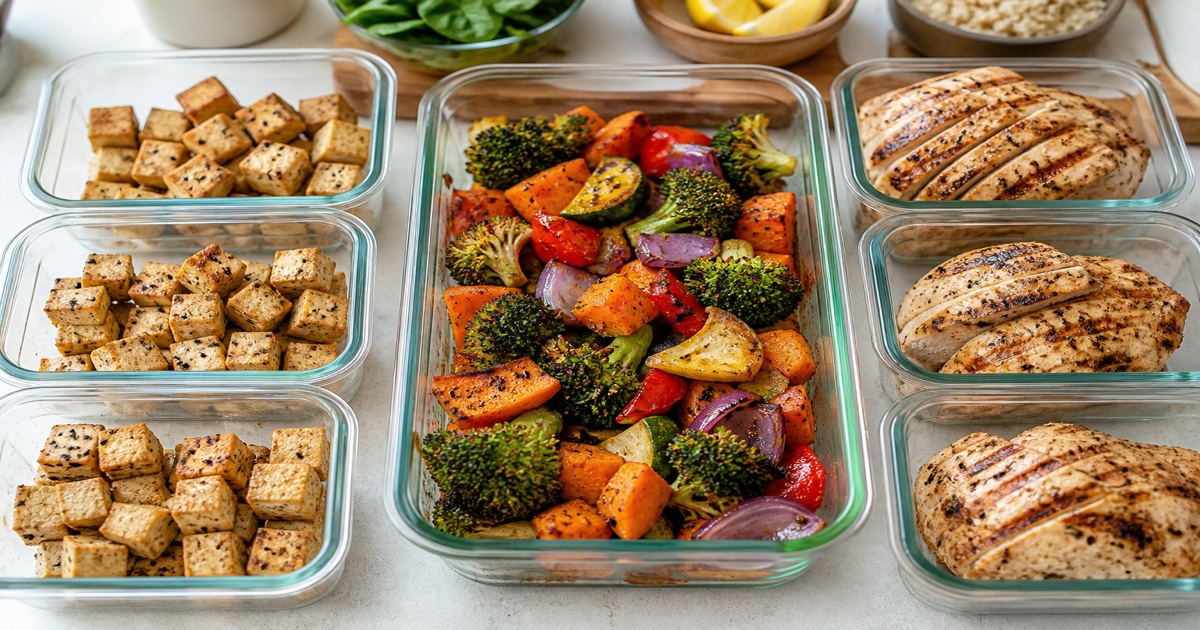
Almost every meal can be built as a shared base plus a modular component. You cook one foundation together, then diverge only at the last step:
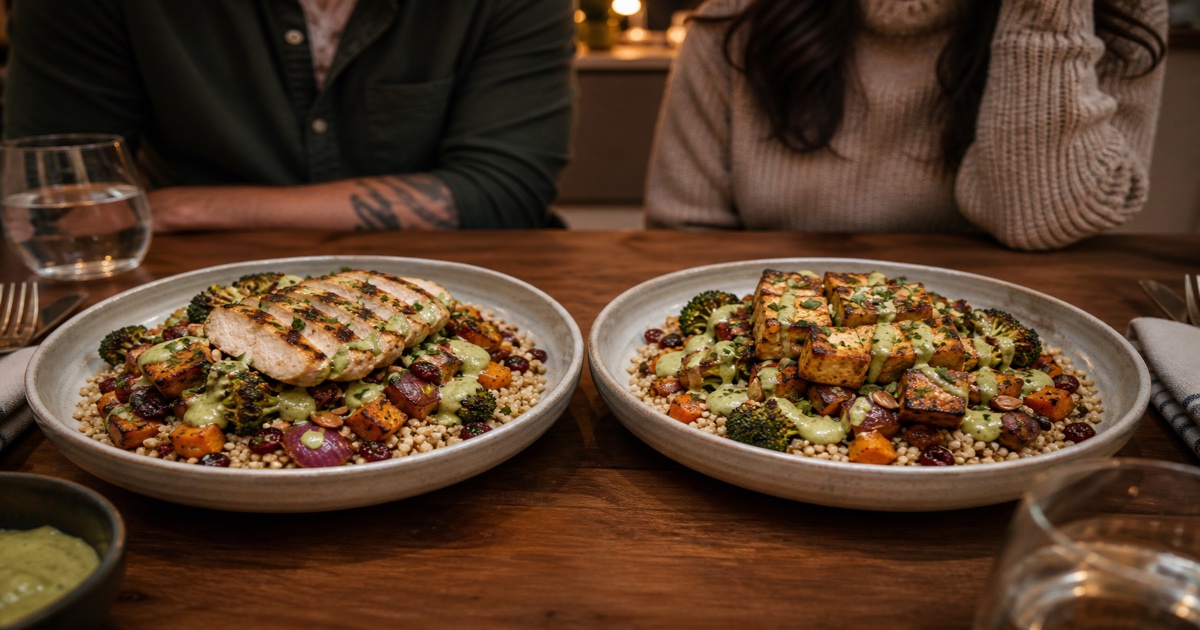
- Grain bowls: shared rice or quinoa, roasted veg, and sauce; one bowl gets tofu, the other gets chicken.
- Taco night: shared tortillas, salsa, and toppings; black beans on one plate, carnitas on the other.
- Pasta bar: shared pasta and vegetables; one sauce is creamy-vegan, the other has sausage.
- Sheet pan: shared vegetables roasted together; proteins on separate halves of the tray.
You cook once. You assemble twice. Nobody compromises, and you are not running two kitchens.
Why a single-profile app makes this worse
Most planners assume one eater with one diet. Feed them a mixed-diet household and they either average your needs into a plan that fits neither of you, or they force one diet to win. What couples actually need is a planner that holds two preference profiles at once—two sets of likes, allergens, and diet rules—and finds genuine overlap instead of a mushy middle.
That is the design of ChefSphere's Couple Zone: each partner keeps an independent profile (vegan, keto, allergens, dislikes), and the shared plan proposes modular meals—"same dinner, different protein"—on the nights your diets diverge. Nobody's hard constraints get silently overridden.
One list, tagged by partner
A mixed diet does not mean two grocery runs. Most of the list overlaps; only a slice differs. A shared, aggregated list that tags the divergent items (tofu for one, chicken for the other) keeps the common 80% together and makes the 20% obvious—so the vegan items never get forgotten and the meat-eater never over-buys.
Make the conflict a component, not a fight
The mental shift that saves mixed-diet couples: a diet conflict almost always lives in one component, not the whole plate. Keto vs high-carb? Swap the carb, share the protein and salad. Vegan vs not? Swap the protein, share everything else. Once you see conflicts as a single swappable slot, "we can't eat the same thing" stops being true.
Put it together
Different diets are a logistics problem, not a relationship problem—solvable with modular meals, two real preference profiles, and one tagged list. See how the options compare in our best meal planning app for couples roundup, or start with the full meal planning for two guide.
Cook once, split late, and let both diets win.


