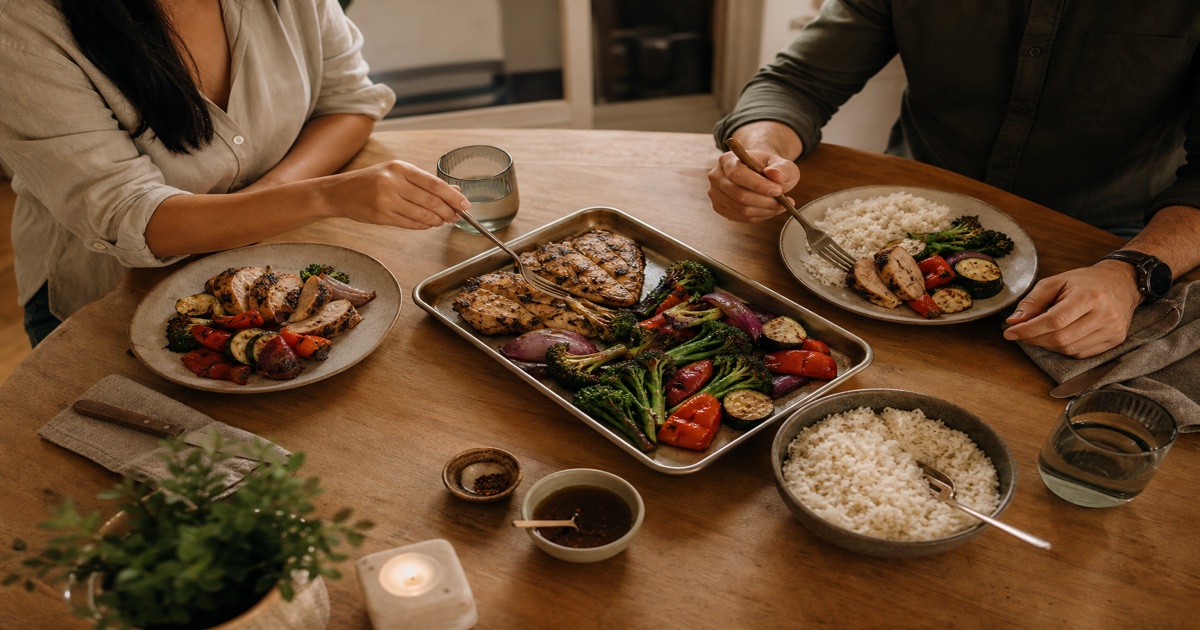
One of you started Ozempic, Wegovy, Mounjaro, or Zepbound. Appetite dropped. Portions shrank. Dinner — the meal you used to share from the same pot — suddenly feels like a mismatch. The partner on the medication picks at a plate while the other still wants a full meal. Or you cook two dinners, double the dishes, and eat at different times anyway.
This is not a willpower problem. GLP-1 medications change hunger, gastric emptying, and how much food feels comfortable in one sitting. The partner who is not on the drug still has normal appetite. The fix is not "just eat less together" or "cook separately forever." It is a modular system: one base, two assemblies, one grocery list, and permission to eat on slightly different schedules when needed.
This guide is practical meal-planning advice for mixed-GLP-1 couples — not medical guidance. Talk to your clinician about protein targets, side effects, and what is safe for you.
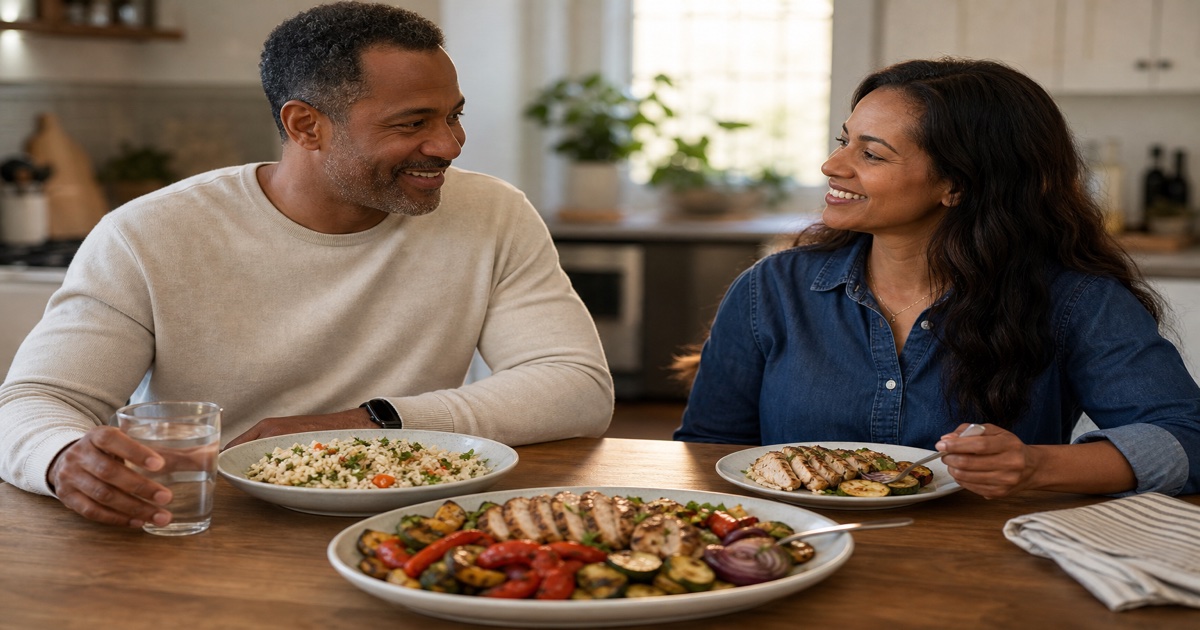
Why GLP-1 breaks the same-plate routine
Before the medication, "dinner for two" meant one recipe, two equal plates, maybe leftovers. GLP-1 changes that in three quiet ways.
Appetite asymmetry. The partner on semaglutide or tirzepatide often feels full after a third of what they used to eat. The other partner is still hungry at 7 p.m. If you keep serving identical portions, someone overeats and someone undereats — or you fight about whether the GLP-1 partner is "being difficult."
Protein pressure. GLP-1 weight loss can cost lean muscle if protein is too low. The GLP-1 partner needs protein-first meals in smaller total volume. The other partner may not need that constraint. Same recipe, different priorities.
Timing shifts. Many GLP-1 users do best with a real meal earlier in the day and a lighter dinner — or the opposite. Shared mealtimes become negotiable, not automatic.
The old rule — same dish, same size, same time — stops working. The new rule is same kitchen, different assembly.
For broader mixed-diet strategies, see our guide to couple meal planning with different diets.
Cook one base, portion two ways
Almost every dinner can be built as a shared foundation plus modular add-ons. You cook once; you plate twice.
The shared base (both partners):
- One protein batch — grilled chicken thighs, baked salmon, turkey meatballs, tofu, or shredded rotisserie chicken
- One or two vegetables — roasted broccoli, sautéed greens, a big salad, sheet-pan peppers and onions
- One sauce or seasoning layer — chimichurri, lemon-garlic yogurt, salsa verde, teriyaki, or a simple vinaigrette
The split (last step, two minutes):
- GLP-1 partner: 4–6 oz protein, generous vegetables, sauce, optional small carb (half cup rice, one small tortilla, or skip)
- Other partner: larger protein portion if desired, same vegetables, sauce, plus add-ons on the side — extra rice, pasta, bread, beans, or cheese
Examples that work every week:
- Grain bowl night: shared quinoa and roasted veg; GLP-1 bowl gets double protein and half the grain; other bowl gets full grain plus avocado
- Taco night: shared protein and toppings bar; GLP-1 partner builds one or two small tacos or a taco salad; other partner builds three or four
- Pasta bar: shared vegetable-heavy sauce; GLP-1 partner gets sauce over zucchini noodles or a small pasta portion with extra protein; other partner gets a full pasta serving
- Sheet pan: proteins on separate halves if sizes differ; shared roasted vegetables in the middle
You are not making "diet food" and "normal food." You are making one meal with a flexible last step — the same approach we use for vegan/omnivore couples, applied to appetite instead of ethics.
A modular week that actually works
Random nightly improvisation burns couples out. A modular week means repeating a few structures so grocery shopping and mental load stay low.
Pick three dinner archetypes that rotate:
- Protein + veg + optional carb (Mon, Thu)
- One-pot or bowl (Tue, Fri)
- Assembly / low-cook (Wed — rotisserie chicken, salad bar, wraps)
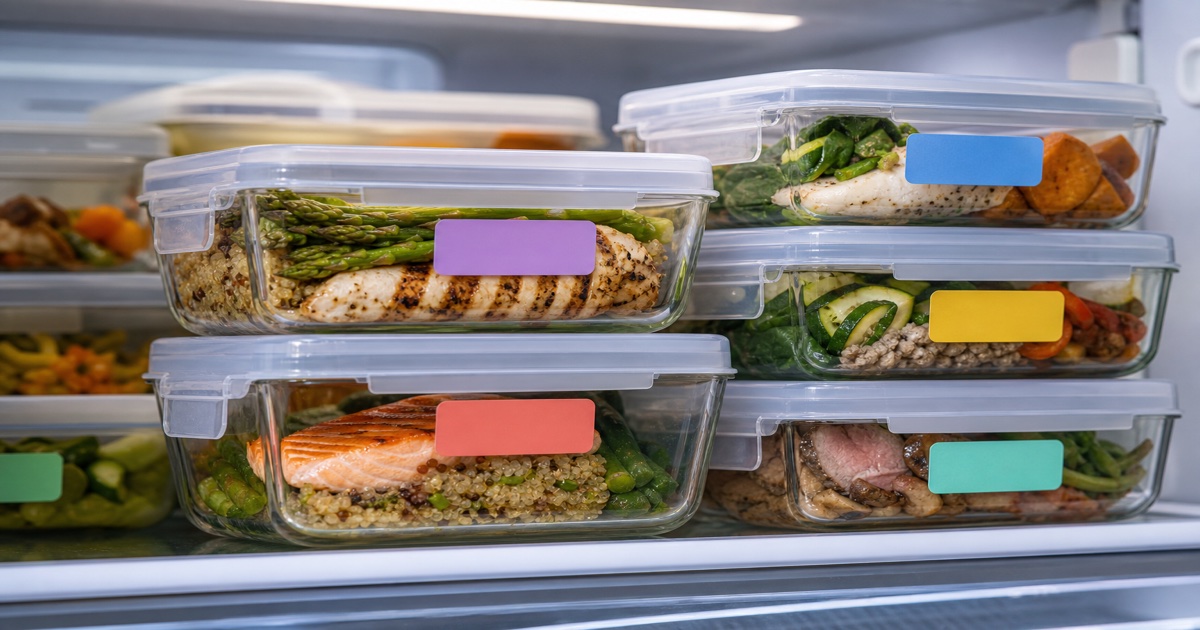
Batch the protein once. Grill chicken on Sunday; use it in bowls Monday, tacos Wednesday, salads Friday. The GLP-1 partner gets protein-forward plates all week without you cooking meat five times.
Keep add-ons in the fridge, visible. Cooked rice, pasta, bread, extra cheese, hummus — for the partner who needs more volume. They self-serve; nobody monitors anyone else's plate.
Plan one "sync meal" and one "async meal" per week. Sync: you sit together, same food, different portions. Async: same batch, but the GLP-1 partner eats at 5:30 and the other at 7:30. Both are valid.
Our meal planning for two hub walks through Couple Zone workflows — shared lists, cooking assignments, and preference merging — that make this rhythm stick.
Eating at different times without drifting apart
Different mealtimes feel lonely if you treat them as failure. Reframe them as logistics.
Same batch, staggered plates. Cook at 5:30. GLP-1 partner eats then; reheat the same components for the other partner at 7. Two minutes of assembly, not two dinners.
Protein-first snack bridge. If the GLP-1 partner cannot face dinner, they hit their protein earlier (Greek yogurt, cottage cheese, a small chicken portion at lunch). Dinner becomes vegetables and a few bites — still at the table if you want company, even with a smaller plate.
Protect the ritual, not the portion. Sit together. Same table. Conversation matters more than matching calorie counts. One partner finishing early while the other eats seconds is fine if nobody comments on "how little" someone ate.
Track protein for the GLP-1 partner, not comparison. The non-GLP-1 partner does not need to match intake. Scorekeeping — "I made a full lasagna and you had three bites" — is what kills the system. Modular planning removes the lasagna-versus-bites fight entirely.
Restaurants and trigger foods
Eating out is where GLP-1 couples often revert to "order two different things and stop sharing." You can do better.
Split strategically. Order one protein-heavy entrée to share (grilled fish, steak, rotisserie chicken) plus a side salad and a starch side for the hungrier partner. GLP-1 partner takes most of the protein and salad; other partner adds the rice, fries, or bread.
Avoid trigger patterns for the GLP-1 partner. Greasy, very large, or ultra-rich dishes worsen nausea on many GLP-1 users. That does not mean the other partner can never order pasta — it means defaulting to places with modular menus: protein + veg + carbs ordered separately.
Skip the "split everything 50/50" assumption. Shared appetizers can work if the GLP-1 partner wants a few bites; forced splitting often leads to overeating or waste.
Hydration on the same schedule. GLP-1 blunts thirst. If you are out together, both ordering water early helps the medicated partner more than commentary about portion size.
Browse diet and condition-specific meal plans for GLP-1-aware templates you can adapt before date night.
ChefSphere Couple Zone: two profiles, one plan
Most meal planners assume one eater. Feed them a GLP-1 household and they either shrink everyone's portions or ignore the medication entirely.
ChefSphere Couple Zone is built for two independent profiles:
- Partner A: GLP-1 flag, higher protein target, smaller default portions, nausea-aware recipe filters
- Partner B: normal calorie and macro targets, full portions, no unnecessary restrictions
The AI merges overlap — modular dinners, shared grocery items, tagged add-ons — instead of averaging you into one fictional person. Both partners swipe preferences separately; the shared plan finds meals where same base, different assembly works.
The aggregated grocery list tags what is shared versus what is add-on (extra rice, second protein portion, snack items for the hungrier partner). Cooking assignments stay visible so one person is not silently doing double duty every night.
When appetite shifts after a dose increase — common on GLP-1 — the AI meal planner adjusts portions week to week instead of handing you a static PDF. Take the plan to the store with the ChefSphere app.
A sample five-dinner modular plan
Monday — Lemon chicken sheet pan Shared: chicken thighs, roasted broccoli and carrots, lemon-garlic sauce. GLP-1: 5 oz chicken, vegetables, sauce. Other: 8 oz chicken, vegetables, sauce, side of rice or potatoes.
Tuesday — Turkey chili bar Shared: lean turkey chili base (beans in the pot; ladle separately if needed). GLP-1: small bowl, extra turkey, avocado, no or half cornbread. Other: large bowl, full cornbread, cheese, sour cream.
Wednesday — Salmon bowls Shared: baked salmon, cucumber, shredded cabbage, sesame dressing. GLP-1: 5 oz salmon, veg-heavy bowl, ½ cup rice. Other: 6–8 oz salmon, full rice, edamame, extra dressing.
Thursday — Rotisserie chicken wraps Shared: shredded chicken, lettuce, tomato, yogurt-herb sauce. GLP-1: one small wrap or chicken salad plate. Other: two wraps or wrap plus side of chips.
Friday — Shrimp stir-fry Shared: shrimp and vegetable stir-fry (light oil). GLP-1: protein-heavy plate, minimal noodles. Other: full portion over rice or noodles, added on at the table.
One grocery list. Five nights. Zero duplicate kitchens.
When to talk to your provider
Meal planning supports treatment; it does not replace clinical care. Contact your clinician if:
- The GLP-1 partner cannot keep fluids down or loses more than 1–2 lb per week consistently
- Protein intake stays far below recommended targets despite structured meals
- Nausea, reflux, or constipation makes eating together stressful for weeks after a dose change
- Either partner shows signs of disordered eating — hiding food, obsessive tracking, or anger about portions
Bring this modular approach to your appointment. Clinicians often appreciate concrete structure — "we cook one base, I eat 30 g protein at dinner" — more than vague "I'm not hungry."
Related reading
- Meal Planning for Two — Couple Zone, shared lists, and fair cooking rotation
- Couple Meal Planning With Different Diets — modular bases for vegan, keto, and mixed households
- Diet & Condition Meal Plans — GLP-1-aware templates and protein targets
- AI Meal Planner — auto-built weeks that adapt when appetite shifts
- Download ChefSphere — shared grocery lists and plans on your phone
Get started: Create a free ChefSphere account. Set one GLP-1 profile and one standard profile, and get a modular week where you cook once, eat together, and stop fighting about portion size — in under a minute.


