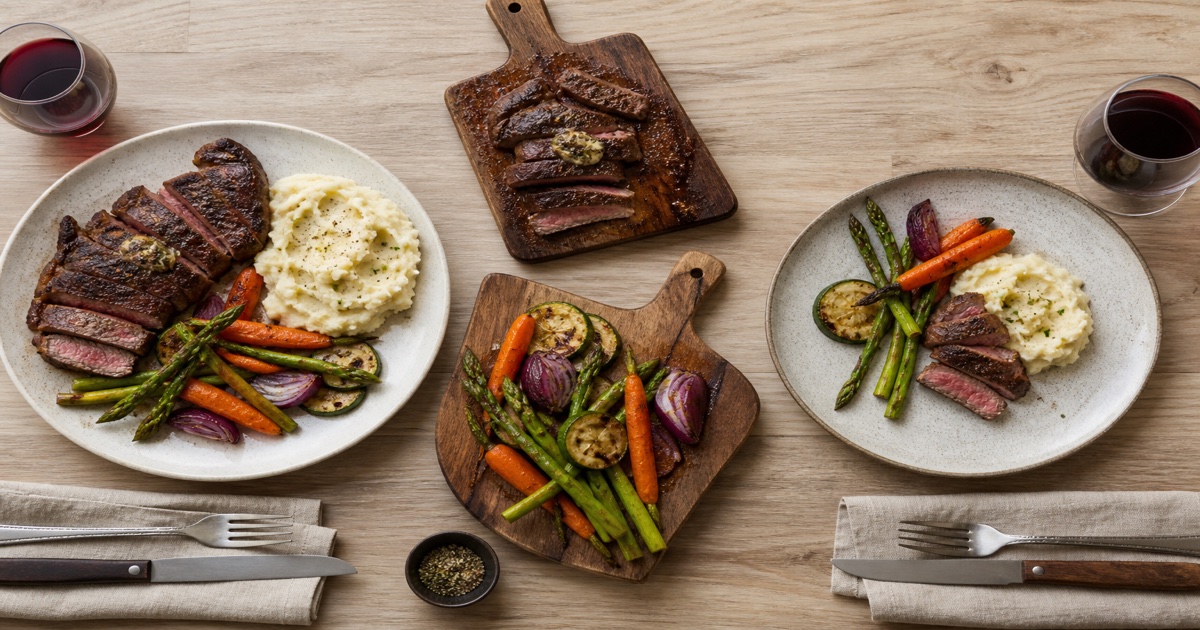
He needs 2,400 calories to maintain muscle after lifting four days a week. She needs 1,600 to stay in a gentle deficit at a desk job. Same kitchen. Same love of dinner together. Completely different math.
The internet offers two bad solutions: cook two separate meals (double the work, double the resentment) or meet in the middle at 2,000 calories (so both feel slightly wrong every night). There is a third path: one base dinner, smart add-ons, portions scaled at the plate — one grocery list, one pot, two satisfied people.
This guide is for couples with different calorie and portion needs — athletes and sedentary partners, bulking and cutting cycles, taller and smaller frames, or anyone who stopped pretending identical plates made sense.
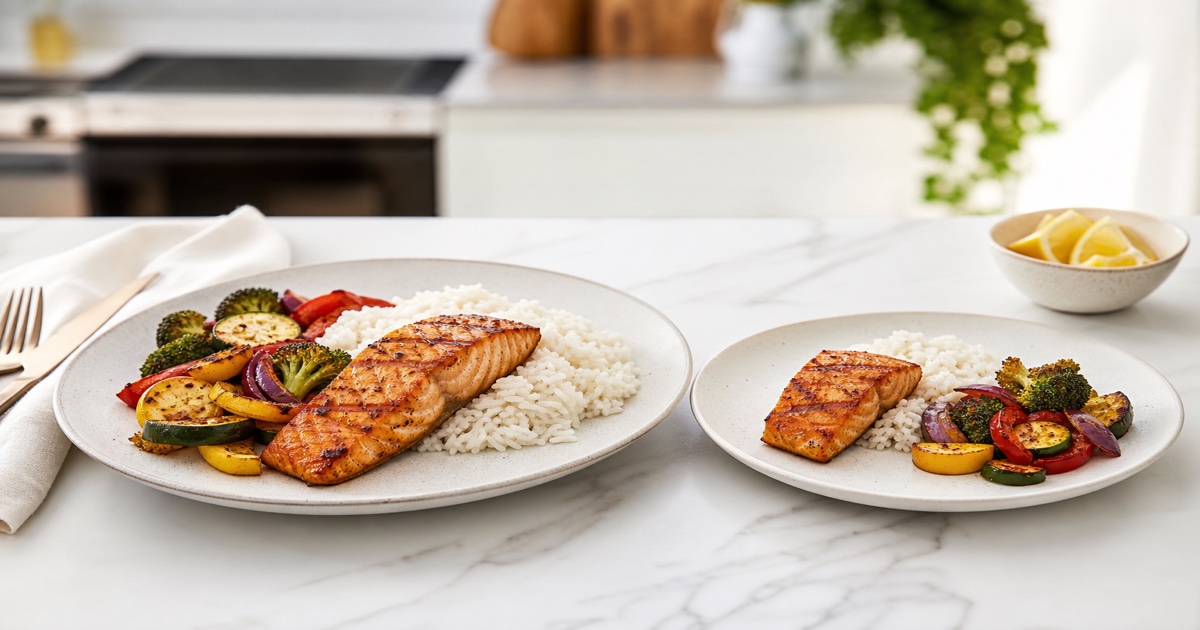
Same kitchen, different math
Calorie needs diverge for obvious reasons: height, muscle mass, activity, age, and goals. A 6'2" runner and a 5'4" office worker are not failing at couplehood because their targets differ by 600–800 kcal. They are failing when every dinner becomes a negotiation.
Three patterns that break couples:
The shrink-everything plate. The higher-calorie partner eats less than they need because "we're eating the same." Fatigue, lost muscle, and late-night snacking follow.
The surveillance plate. The lower-calorie partner feels watched when the other gets seconds. Meals become tense.
The duplicate kitchen. Two proteins, two pans, two cleanup cycles. Sustainable for a week; miserable for a year.
The fix is structural: shared base, divergent assembly. You are not eating different diets. You are eating the same dinner with different volume in one or two components — usually starch, fat, or an extra protein portion.
For mixed-diet households (keto vs carb-forward, vegan vs not), the same modular logic applies — see couple meal planning with different diets.
One base, scaled portions, smart add-ons
Build every dinner in three layers:
Layer 1 — Shared (both partners, same pot):
- Protein: chicken, fish, beef, tofu, eggs, legumes
- Vegetables: roasted, sautéed, or raw — aim for volume both can eat
- Flavor base: spices, aromatics, a shared sauce or dressing
Layer 2 — Scaled at the plate:
- Lower-calorie partner: moderate protein (often 4–6 oz cooked), generous veg, controlled starch and fat
- Higher-calorie partner: larger protein (6–8 oz), same veg, more starch and/or fat
Layer 3 — Smart add-ons (fridge or counter, self-serve):
- Extra rice, pasta, bread, tortillas
- Cheese, avocado, nuts, olive oil drizzle
- Second protein portion pre-cooked and labeled
Add-ons are not "your special food" versus "my diet food." They are neutral extras anyone can take. The higher-calorie partner adds without commentary; the lower-calorie partner skips without explanation.
Example — chicken stir-fry night: Shared wok: chicken, peppers, broccoli, ginger-garlic sauce. Her plate: 5 oz chicken, veg-heavy, ½ cup rice (~450 kcal dinner component). His plate: 8 oz chicken, same veg, 1½ cups rice, drizzle of sesame oil (~750 kcal dinner component). Same pan. Thirty seconds of plating difference.
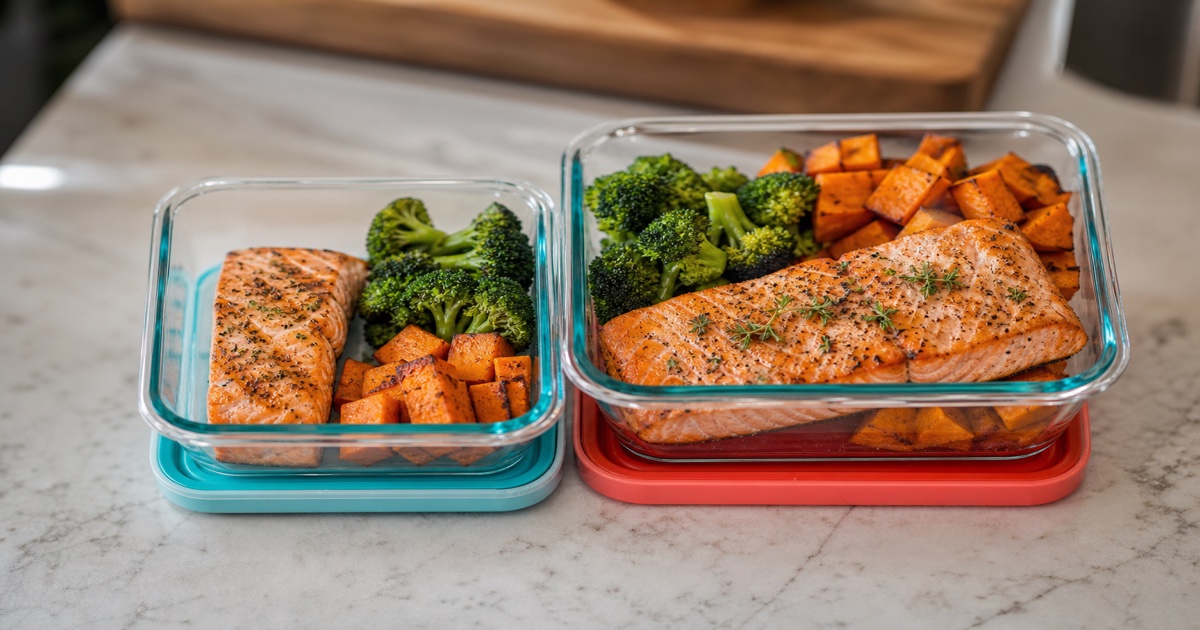
Sauces and carbs on the side
Most calorie gaps live in sauce and starch, not in the protein or vegetables. Putting those on the side solves 80% of dual-portion dinners.
Carbs on the side: Cook rice, pasta, or potatoes in a separate pot or hold them in a warm container at the table. Each person spoons their own. No one cuts a lasagna into unequal squares.
Sauce on the side: Cream, cheese, and oil-heavy sauces add calories fast. Serve them in a bowl; the higher-calorie partner uses more. Both still eat the same grilled protein and salad.
Fat as an optional finish: Olive oil, butter, grated cheese, tahini — last-step additions the higher-calorie partner adds without changing the shared recipe.
Protein batching: Cook a full tray of chicken thighs. Portion into containers marked by size if helpful — not as judgment, but as speed on busy nights.
This is the same "cook once, split late" system from our meal planning for two guide, tuned for calories instead of diet labels.
A week of dual-portion dinners
Rotate structures so you are not recalculating from scratch every night:
| Night | Archetype | Shared base | Typical split |
|---|---|---|---|
| Mon | Sheet pan | Protein + roasted veg | Extra potatoes on side for higher kcal |
| Tue | Bowl | Grain, protein, veg, sauce | Half grain vs full grain + avocado |
| Wed | One-pot | Chili or curry | Extra rice/bread for one partner |
| Thu | Salad + protein | Big salad, grilled protein | Bread, cheese, double protein add-on |
| Fri | Assembly | Wraps or tacos | 1 vs 3 tortillas, same fillings bar |
Batch Sunday: Cook two starch options (rice + roasted potatoes) and one extra protein portion for the week. Weeknight plating stays under two minutes.
One wildcard night: Takeout or date night with the same rule — shared protein, separate starches ordered à la carte.
One grocery list for both targets
Dual-portion planning fails when shopping is vague. You need one aggregated list that includes:
- Shared ingredients (proteins, vegetables, pantry)
- Tagged add-ons (extra rice, bread, cheese, snack items for the higher-calorie partner)
- Quantities that reflect both targets — not averaged, summed
Without that, the higher-calorie partner "supplements" with random delivery orders; the lower-calorie partner ends up with trigger foods in the fridge they did not plan for.
ChefSphere builds the list from the actual dual-portion plan — so "extra jasmine rice" appears because Wednesday's bowl needs it, not because someone remembered at the store.
How ChefSphere auto-scales for two
Manual portion math works until life gets busy. ChefSphere Couple Zone stores separate calorie and macro targets per partner and generates:
- Shared dinners with per-person portion guidance
- Modular recipes where carbs and sauces are naturally on the side
- An aggregated grocery list with add-ons tagged
- Adjustments when one partner's activity or goal changes week to week
Both partners maintain independent profiles — swipe preferences separately, merge into one plan. The AI meal planner recalculates when someone switches from maintenance to a cut, or when race training adds 400 kcal/day.
Use the ChefSphere app at the store so both partners see the same list in real time. Explore diet meal plans for starting templates (high-protein, Mediterranean, athlete-focused) you can dual-scale.
Copy-paste five-dinner plan with numbers
Approximate dinner components only — adjust to your exact targets and consult a dietitian for medical goals.
Monday — Herb pork tenderloin sheet pan Shared: pork tenderloin, green beans, carrots, mustard-herb glaze. ~1,600 kcal partner: 4 oz pork, vegetables, ½ cup roasted potatoes (~520 kcal). ~2,400 kcal partner: 7 oz pork, vegetables, 1 cup potatoes, side salad with vinaigrette (~780 kcal).
Tuesday — Beef and broccoli bowls Shared: lean beef strips, broccoli, stir-fry sauce (light oil in wok). ~1,600 kcal: 4 oz beef, broccoli, ½ cup rice (~480 kcal). ~2,400 kcal: 7 oz beef, broccoli, 1½ cups rice, drizzle sesame oil (~820 kcal).
Wednesday — Mediterranean salmon plates Shared: baked salmon, cucumber-tomato salad, tzatziki. ~1,600 kcal: 5 oz salmon, salad, ½ cup couscous (~550 kcal). ~2,400 kcal: 7 oz salmon, salad, 1 cup couscous, pita, extra tzatziki (~850 kcal).
Thursday — Chicken taco bar Shared: seasoned chicken, lettuce, salsa, peppers, onion. ~1,600 kcal: 4 oz chicken, 2 small corn tortillas, veg toppings (~500 kcal). ~2,400 kcal: 7 oz chicken, 4 tortillas, cheese, guacamole (~900 kcal).
Friday — Lentil and sausage soup (modular) Shared: vegetable-rich lentil soup base. ~1,600 kcal: large bowl soup, side greens (~450 kcal). ~2,400 kcal: large bowl soup, added sliced sausage portion, bread with butter (~750 kcal).
Weekly add-on staples to stock: extra rice, bread, cheese, avocado, nuts, olive oil, second protein batch.
Do not keep score
Dual-portion systems die when meals become competitive.
Rules that help:
- Add-ons are neutral and visible — not hidden or "yours vs mine"
- No comments on seconds, skips, or speed of eating
- Wins rotate — higher-calorie partner's comfort meal one night, lower-calorie partner's another
- Track your own intake if you track at all; do not police your partner's plate
Calorie difference is not moral difference. One partner training for a marathon and one in a desk-job deficit are both allowed to eat enough for their goal at the same table.
If tension persists, revisit whether targets are realistic — extreme deficits plus high surplus in the same household need professional guidance, not tighter surveillance at dinner.
Related reading
- Meal Planning for Two — Couple Zone, cooking rotation, shared grocery workflows
- Couple Meal Planning With Different Diets — modular meals when diets differ, not just calories
- Diet & Condition Meal Plans — high-protein, athlete, and weight-loss templates
- AI Meal Planner — dual-target weeks that update when goals change
- Download ChefSphere — synced lists and portion-aware plans on your phone
Get started: Create a free ChefSphere account. Enter both calorie targets, get one modular week with scaled portions and a single grocery list — no scorekeeping required.


