Health tracking
Nutrition tracking that the meal plan can read
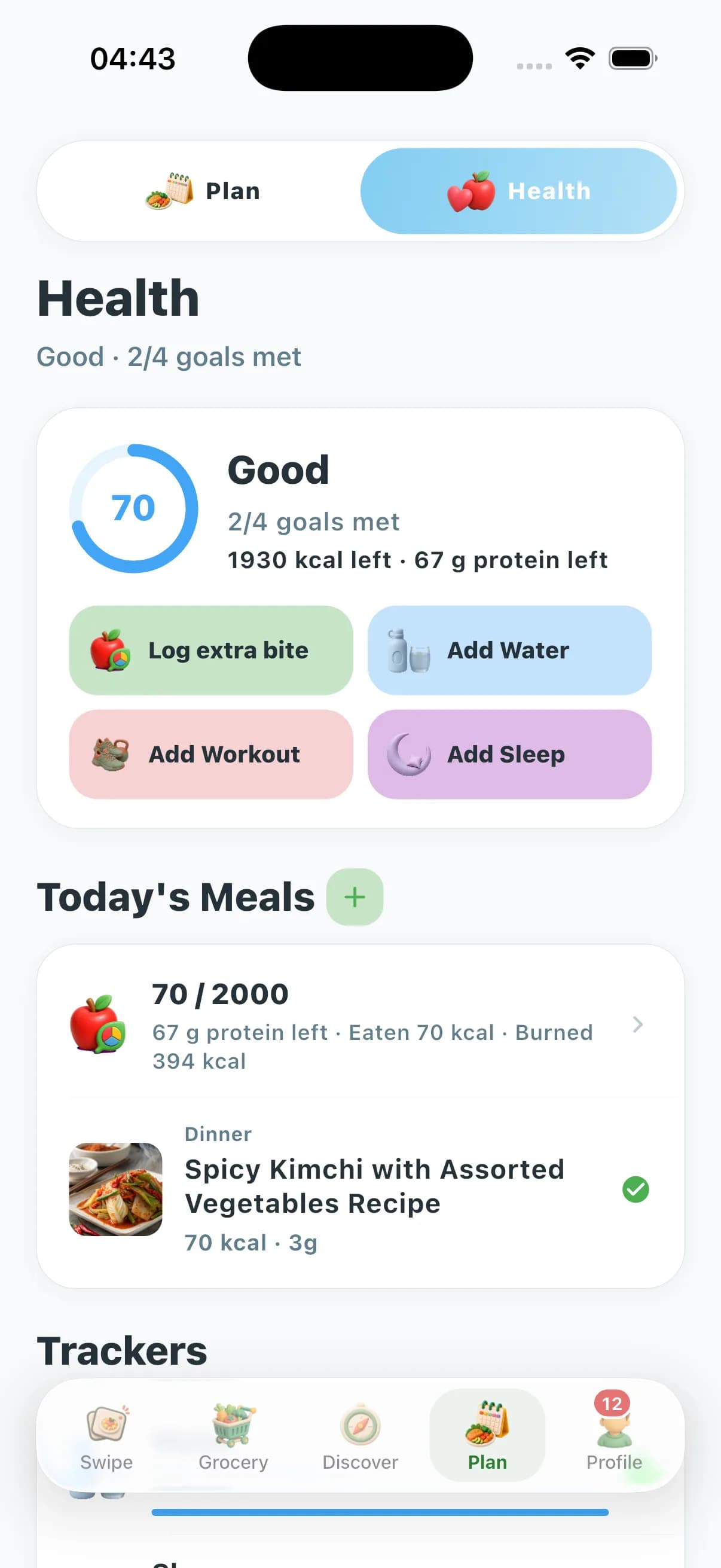
Calories, protein, carbs, fats and key micronutrients tracked next to your goals and dietary preferences. The same data the AI meal planner uses when it suggests swaps mid-week.


Why this pillar matters
A naive calorie counter tells you about today and forgets it tomorrow. ChefSphere stores adherence over weeks so the planner can react: protein is consistently low? Recipes lean protein-forward. Fibre is short across the week? Whole-grain and pulse-based options surface more often.
Because preferences and dietary guardrails sit alongside intake, swaps respect what you actually eat — vegetarian, halal, gluten-free, family allergies — instead of suggesting a recipe that ignores half of your profile.
What the nutrition tracker does
Daily intake with calories, protein, carbs, fats and selected micronutrients.
Customisable goals tied to your focus — fat loss, muscle, energy, longevity.
Adherence analytics across 7- and 30-day windows.
Dietary preferences and allergens surfaced next to totals.
Meal-time entries that map to recipes you cooked from ChefSphere.
Trend alerts when key micronutrients drift across the week.
Optional integration with AI meal planning for portion and recipe swaps.
Export of your nutrition logs from settings, on request.
How nutrition specifically tunes meal planning
Nutrition is the most direct lever. When the planner sees that protein adherence has slipped over the last seven days, it raises protein-forward recipes for the next plan, prioritising ones already inside your liked recipes. If fibre is consistently short, plant-led recipes appear before processed alternatives.
Macro ceilings work the same way. If you stay under your calorie ceiling on most days but blow through on weekends, the planner can rebalance lighter recipes earlier in the week to keep totals honest without forcing dramatic Monday cuts.
Goal samples
Sustainable fat loss
Moderate calorie deficit with steady protein at 1.6–2.0 g/kg.
Muscle gain
Light surplus with protein priority and carbs concentrated around training.
Family-friendly balance
Stable macros that keep recipes age-appropriate for the household.
Endurance fueling
Carb-forward days for long sessions, lighter on rest days.
Longevity-leaning
30+ plant points per week with consistent protein and fibre floors.
Diabetes-aware eating
Carb cadence and fibre tracked together, in line with your clinician’s guidance.
Nutrition tracker — FAQ
Do I have to weigh every gram?
No. Quick entries and saved meals are the priority. The tracker is built to be useful even with imperfect logs, and the planner reads trends, not single grams.
Can the planner change my macros automatically?
Only if you opt in. By default the planner suggests changes; you accept or reject them. You can also lock specific macros so the planner stops moving them.
Are micronutrients tracked too?
Selected key micronutrients are surfaced (e.g. fibre, iron, calcium) when recipes carry the data. It is supportive context, not a clinical micronutrient panel.
How does this work with vegetarian or halal diets?
Your dietary preferences sit next to intake. Swaps and AI suggestions respect them by default; you can also block whole categories of ingredients.
Can a couple share nutrition tracking?
Each person keeps their own log. Couple Zone aggregates the meal plan and grocery list while preserving individual macros and preferences.
Important note
Nutrition tracking is informational everyday support, not medical advice. For clinical conditions or therapeutic diets, follow a qualified professional and use the tracker only as the secondary layer. See /legal/terms, /legal/privacy and /legal/ai-disclosure.
Continue with ChefSphere
See nutrition in the app
These pages explain the suite. Interactive logs, charts and goals run in the app at /health after you sign in.

