
Family Meal Planning When You Have Picky Eaters (Systems That Don’t Start Wars)
6 min read
CES 2026 unveiled AI cooking agents, smart fridges with barcode scanners, and robot chefs. We separate the hype from what actually helps you cook dinner tonight — and where AI meal planning already delivers.
April 16, 2026 · 6 min read · By ChefSphere Team
ChefSphere Team
The ChefSphere Team builds AI-powered meal planning tools for recipe discovery, grocery planning, and weekly meal organization. We combine nutrition science, real grocery data, and taste-learning algorithms to make weekly meal planning effortless.
ChefSphere AI builds your weekly meal plan in seconds — personalized to your taste, budget, and health goals. No credit card required.
Curated recipe discovery • AI meal planning • Available on iOS, Android & Web
For most people, no. The GE smart fridge costs $4,899 and uses barcode scanning which misses loose produce, bulk items, and leftovers. A free phone-based vision AI app like ChefSphere handles the same use case — and works with your existing fridge.
An AI cooking agent is software that automates parts of the cooking workflow — from ingredient recognition to meal planning to grocery list generation. In 2026, the most practical agents are phone-based apps, not hardware appliances.
AI excels at constraint satisfaction — balancing taste preferences, budget limits, nutritional targets, ingredient reuse, and household coordination simultaneously. Humans struggle to optimize all these variables across a full week. AI does it in seconds.
No. You need your phone (camera for vision AI, app for meal planning), a free ChefSphere account, your existing kitchen, and 10 minutes on Sunday to review your AI-generated plan. Total cost: zero on the free plan.
Smart fridges use barcode scanning (SKU-level product IDs). Vision AI uses your phone camera to recognize loose produce, bulk items, opened packages, and leftovers — the messy real-life items that barcodes miss.
CES 2026 was a buffet of AI kitchen promises. GE unveiled a $4,899 smart fridge with a built-in barcode scanner and AI recipe suggestions. Wan AIChef debuted a microwave-based "AI cooking agent" that claims to plan meals, personalize recipes, and track nutrition. Nosh showed an autonomous cooking device with 500+ recipes. The Observer called it "the rise of the chatbot cook." The New York Times reminded readers that their phone's timer is already a cooking tool.
The hype is real. But so is the question: what actually helps you cook dinner tonight?
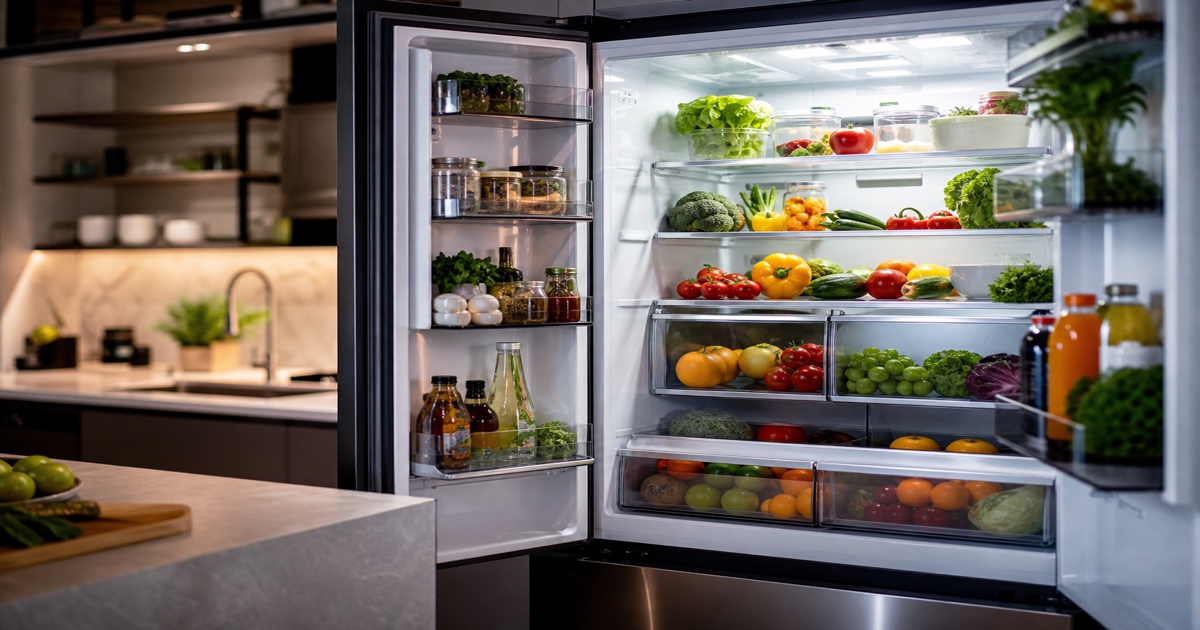
A French-door refrigerator with a built-in barcode scanner and 8-inch tablet. Scan items as you put them in; the fridge tracks inventory and suggests recipes based on what you have.
The promise: Never forget what is in your fridge. Get recipe ideas from your actual ingredients.
The reality: Barcode scanning requires you to scan every item — a behavior change most people abandon within weeks. The fridge only sees packaged goods with barcodes. Loose vegetables, bulk items, and leftovers are invisible. And at $4,899, it is a $500 premium over the non-smart version for features your phone already does.
A microwave-based system running a proprietary AI model (Zhurong Cooking Model). It claims to plan meals, personalize recipes, create grocery lists, factor in nutrition goals, and cook the food with ±3°C temperature control.
The promise: An end-to-end cooking agent that decides what you eat and makes it.
The reality: As The Gadget Flow noted, "this is still a microwave-based system, not a robotic chef chopping, stirring, or sautéing for you." It works best for people who see cooking as a problem to solve, not an activity to enjoy. The full promise requires committing to letting the device handle most meals — a hard sell for anyone who likes variety.
A device with 500+ recipes that automates cooking from raw ingredients.
The promise: Load ingredients, press start, dinner is done.
The reality: 500 recipes is a tiny fraction of what humans cook. Autonomous kitchen hardware is in early-adopter territory — impressive demos, limited real-world utility for diverse home cooking.
The "dinner problem" is not a hardware problem. It is a decision problem:
A $5,000 fridge solves problem #2 poorly (barcodes only). A microwave agent solves problem #1 within a narrow cooking method. Neither solves the full chain — and neither adapts to your household's dynamics.
Software AI solves all four problems today. Not in a CES demo — in production, on your phone, for free.

ChefSphere's vision AI lets you take a photo of your fridge, pantry, or countertop. The AI identifies ingredients — including loose vegetables, bulk items, leftovers, and opened packages — and suggests recipes based on what it sees.
No barcode. No $5,000 hardware. Just your phone camera and a model that actually recognizes food in the wild.
Instead of a microwave that decides for you, Quick Recipe modes give you four instant paths:
These modes generate real recipes in seconds — not from a library of 500, but from a generative AI that creates recipes tailored to your ingredients, taste profile, and dietary constraints.
CES showed gadgets that track calories. ChefSphere builds a feedback loop: your Health Tracking Suite monitors nutrition, water, sleep, and workouts. Next week's AI meal plan adjusts based on what your body actually needs — more protein after heavy workouts, lighter meals after poor sleep, fewer calories on rest days.
No smart fridge does this. No microwave agent does this. This requires software that connects health data to meal generation — and that connection is where real value lives.
The CES gadgets are single-user devices. Real kitchens have multiple people with different preferences:
Hardware does not know your partner hates cilantro. Software that has watched both of you swipe through 200 recipes does.
After the CES hype fades, here is what matters for AI in the kitchen:
The bottleneck is deciding what to cook, not the cooking itself. AI that helps you decide better (based on preferences, budget, nutrition, what you have) delivers more value than AI that cooks for you within narrow constraints.
A smart fridge is the same smart fridge on day 365 as day 1. An AI meal planner that has learned your 50+ taste characteristics, tracked your nutrition for months, and merged your household's preferences gets better every week. Compounding intelligence beats static hardware.
A $4,899 fridge is accessible to a small market. A free AI meal planner on your phone is accessible to everyone. The democratization of AI cooking intelligence matters more than premium hardware.
You do not need CES gadgets. You need:
Total cost: €0/month on the free plan. No smart fridge. No robot chef. Just intelligence where it matters — the decision layer between "I need to eat" and "here is what I am making."
CES 2026 was exciting. The GE fridge is beautiful. The wan AIChef is conceptually interesting. But the products that will actually change how people cook are software products that run on hardware you already own.
The AI cooking revolution is not waiting for a $5,000 fridge. It is already on your phone.
Get started: Create a free ChefSphere account. Scan your fridge with vision AI, swipe through recipes, and get a personalized meal plan in under a minute.

