Keto is not “low carb vibes.” It is a metabolic strategy built around very low carbohydrate intake so your body shifts toward burning fat-derived ketones for fuel. In April 2026, beginners still fail for the same reason: they track mythology instead of grams, and they build meal plans from random recipes instead of repeatable structure. This guide gives you a sane macro frame, a seven-day blueprint you can adapt, and a realistic way to use diet-aware meal planning without turning your life into a spreadsheet.
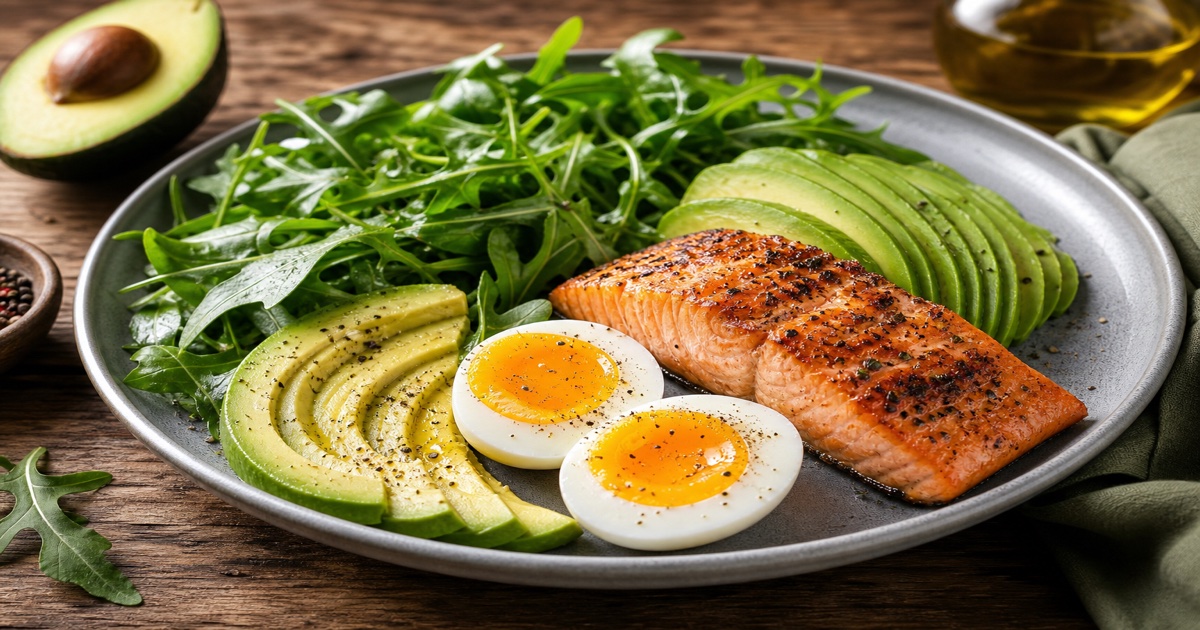
The macro frame that matters
Most therapeutic keto patterns cluster around:
- Carbs: often roughly 20–50g net carbs/day for strict approaches (definitions vary; net carbs = total carbs minus fiber, region-dependent labeling).
- Protein: adequate protein to protect lean mass—often roughly 1.2–1.7g/kg bodyweight for many adults training or active (individual needs vary).
- Fat: remainder of calories—not “infinite butter,” but the lever you adjust after carbs and protein are set.
If you only track one number early, track net carbs with consistency. Inconsistent counting creates fake progress and real frustration.
A 7-day blueprint (structure, not dogma)
Think in archetypes so shopping stays stable:
- Breakfast archetypes: eggs + greens; Greek yogurt alternatives (if fits your carb budget); chia/flax options if tolerated.
- Lunch archetypes: salad + protein + olive oil; leftovers from dinner; soup with explicit carb accounting.
- Dinner archetypes: protein + non-starchy vegetables + fat (olive oil, avocado, fatty fish).
A practical week might rotate:
- Day 1: salmon, asparagus, butter/lemon
- Day 2: chicken thighs, cauliflower, garlic butter
- Day 3: beef, broccoli, sesame oil
- Day 4: eggs + greens heavy lunch; dinner: pork tenderloin + salad
- Day 5: tuna/chicken salad (measure add-ins)
- Day 6: zucchini noodles + meat sauce (watch tomato carbs)
- Day 7: simpler cooking—sheet pan proteins + one sauce you enjoy
This is not medical advice; it is a template you can swap based on allergies, culture, and budget.
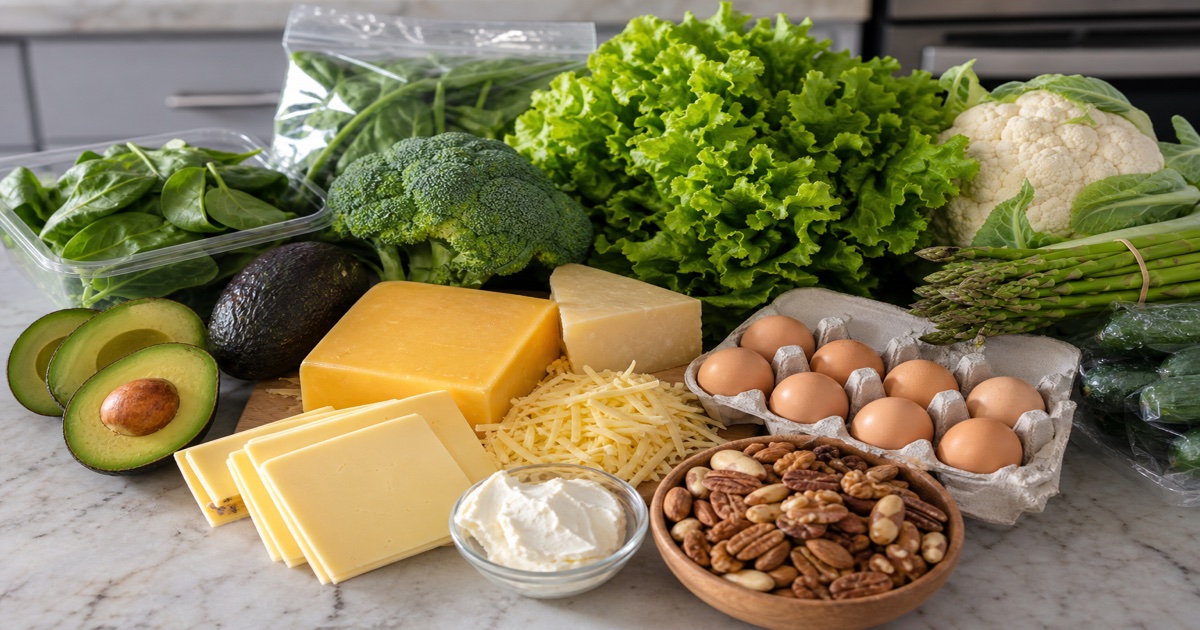
Shopping logic that prevents "keto junk food" failure
Beginners often replace carbs with ultra-processed keto substitutes for every meal. That can work occasionally, but it is expensive and easy to overeat. A better default: whole-food proteins, leafy greens, cruciferous vegetables, olives/avocado, nuts (portion-controlled), and simple oils.
The 2025–2030 Dietary Guidelines now explicitly recommend avoiding ultra-processed foods. This aligns with good keto practice: whole-food keto is both healthier and cheaper than "keto product" keto.
If you want price realism while you shop, Community Prices helps anchor estimates to real local contributions—not fantasy cart totals.
The keto grocery staples list
| Category | Buy | Avoid |
|---|---|---|
| Proteins | Chicken thighs, salmon, ground beef, eggs, bacon | Breaded meats, processed "keto nuggets" |
| Fats | Olive oil, avocado oil, butter, coconut oil | Seed oil blends, margarine |
| Vegetables | Spinach, broccoli, cauliflower, zucchini, bell peppers | Potatoes, corn, peas (high starch) |
| Dairy | Full-fat cheese, heavy cream, Greek yogurt (plain) | Sweetened yogurt, low-fat products with added sugar |
| Snacks | Nuts (portioned), olives, cheese crisps, boiled eggs | "Keto bars" with maltitol, keto cookies |
| Condiments | Mustard, hot sauce, mayo (check ingredients), soy sauce | BBQ sauce, teriyaki, ketchup (sugar-heavy) |
What the new dietary guidelines mean for keto
The January 2026 guidelines raised protein recommendations to 1.2–1.6 g/kg. Good news for keto: most well-constructed keto diets already meet or exceed this. The guidelines also endorsed full-fat dairy — a vindication for keto practitioners who have been eating butter and whole milk yogurt for years.
Where keto needs to pay attention: the guidelines push fiber (25–38 g/day). Many keto dieters fall short because they avoid high-fiber foods that also happen to be high-carb (beans, whole grains, fruit). The fix: emphasize keto-friendly fiber sources — flax seeds (8g/30g serving), chia seeds (10g/oz), avocado (5g/half), and cruciferous vegetables.
Mistakes that quietly break keto meal plans
- Hidden carbs in sauces (BBQ, teriyaki, sweet chili) — a tablespoon of BBQ sauce can have 6g sugar.
- Snack grazing that never gets logged — handful of nuts × 5 times = 500+ untracked calories.
- Protein too low → hunger → willpower collapse. Fat too chaotic → calories swing wildly.
- No backup meal for late nights—this is where takeout wins. Keep frozen keto-friendly meals as insurance.
- Electrolyte neglect — keto flushes sodium, potassium, and magnesium. Supplement or get headaches.
- Weekend carb creep — "just this once" every Saturday adds up to never being in ketosis.
How AI meal planning helps (without promising magic)
A good AI plan does not "know your soul." It does three useful things:
- enforces your stated constraints (net carb cap, protein floor) across a week,
- reduces decision fatigue — no "what can I eat?" googling at 6pm,
- generates a grocery list aligned to what you actually intend to cook.
The ChefSphere keto workflow
- Set dietary pattern: Select keto in diet meal plans. Set net carb cap (e.g., 30g/day).
- Swipe to train taste: Swipe for Meals learns which keto-friendly meals you actually enjoy.
- AI generates weekly plan: Stays under your carb cap, hits protein target, rotates meals you rated well.
- Grocery list auto-generates — keto staples aggregated, no impulse buying.
- Health tracking monitors actual macros — if you slip over carbs on Tuesday, the AI adjusts Wednesday–Friday.
- Quick Recipe from pantry: Scan your fridge with vision AI when the plan breaks — get a keto-compliant meal from what you have.
Keto for couples
If one partner is keto and the other is not, the modular approach works: shared protein base, keto partner skips the starch, non-keto partner adds rice or bread. Couple Zone handles this automatically — both profiles are respected, one grocery list, one cooking session. Read the full couples guide.


