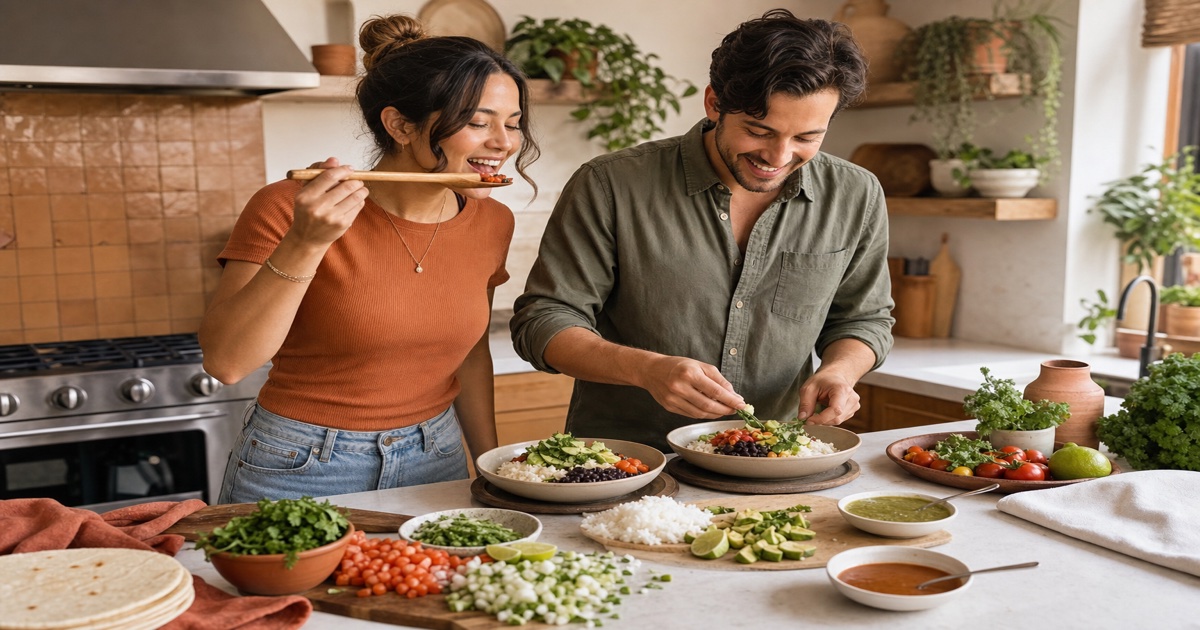
One of you grew up on stew and rice; the other thinks dinner is a cheese board and whatever's in the fridge. You both said "we'll cook together more" when you moved in—and by week two you're eating cereal at 9pm because choosing a recipe felt like negotiating a treaty.
Learning to cook together is not about becoming identical eaters. It is about building a shared weekly routine that respects both palates, keeps one person from doing all the emotional labor, and turns "what do you want?" into a plan you both trust.
The myth: you must eat identical meals
Couple meal advice often assumes one pot, two identical plates. That works until it doesn't—different protein targets, one vegetarian night, one partner who hates mushrooms, or a spice tolerance gap that turns mild salsa into a crisis.
The fix is not two separate dinners every night. It is one base, two plates: same kitchen session, same cleanup, customized assembly. You eat together without pretending you are the same person.
If your diets diverge more sharply (vegan + keto, halal + pescatarian), the modular approach in our couple meal planning for different diets guide goes deeper. For most beginner couples, the base-meal method covers 80% of the friction.
Map your two food personalities
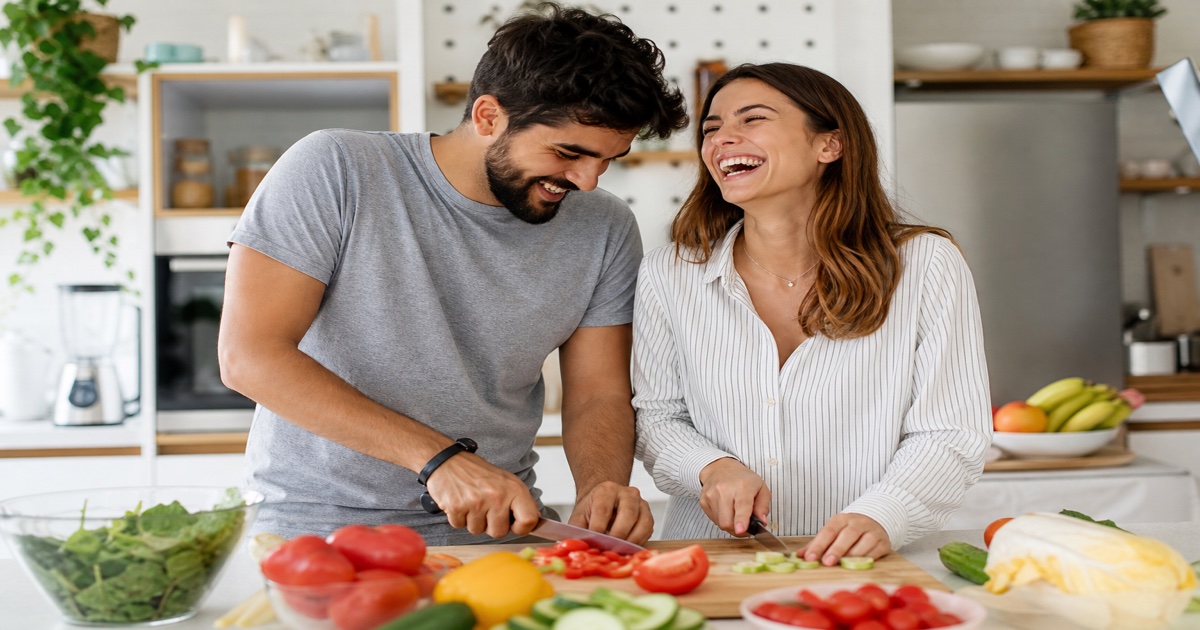
Before you pick recipes, name the patterns. Sit down once—twenty minutes, snacks optional—and answer for each partner:
| Dimension | Partner A | Partner B |
|---|---|---|
| Comfort vs adventure | Same five meals on repeat? | Wants new cuisines weekly? |
| Spice tolerance | Mild | Hot |
| Texture | Crunchy salads | Soft stews |
| Hard nos | Allergies, ethics, religion | Allergies, ethics, religion |
| Effort budget | 20 min weeknights max | Will spend 45 min on a project |
| Leftover appetite | Loves them | Tolerates one day max |
You are not looking for compromise on every row. You are looking for where to rotate wins and where to use the base-meal method so nobody loses every night.
Store this honestly. ChefSphere Couple Zone keeps independent taste profiles—likes, dislikes, allergens, spice level—and merges them into one meal plan so the system remembers what a shared note never will.
The base-meal method: one dinner, two plates
The base-meal method is the beginner couple's best tool. One person (or both, on cook-together night) prepares a shared foundation. Each partner assembles their plate.
Format examples:
- Grain bowl bar: rice or quinoa + roasted veg + two proteins (chicken and chickpeas) + sauces on the side
- Taco night: shared fillings, separate shells (hard vs soft), optional dairy on one plate only
- Sheet-pan tray: same veg, different protein corners (salmon vs tofu)
- Pasta pot: one sauce, two add-ins (sausage vs mushrooms)
- Big salad: shared greens and dressing, separate toppings
Rules that keep it peaceful:
- Build the base together or assign one lead — do not co-manage every chop
- Sauces and toppings stay separate until plates are assembled
- No commentary on the other person's plate — you are not each other's food coach
Browse recipes tagged for bowls, tacos, and sheet-pan formats when you want starters; the method matters more than the specific dish.
Build your shared go-to list of 15
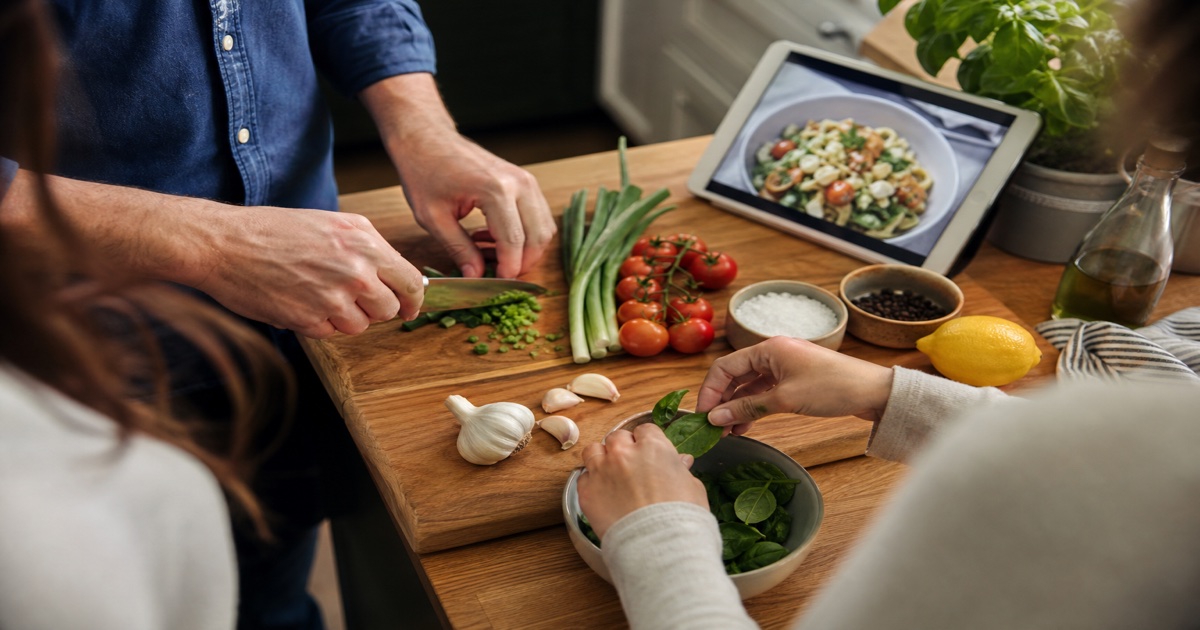
Decision fatigue kills couple cooking. Replace nightly invention with a go-to list of fifteen dinners you both accept—not love every time, but accept.
Structure it deliberately:
- 5 Partner A wins — their comfort classics
- 5 Partner B wins — theirs
- 5 shared wins — meals you both request
Examples of shared wins: stir-fry, taco bar, shakshuka, sheet-pan salmon and veg, chili. Examples of personal wins might be mac and cheese vs pho—schedule them on nights that partner cooks so effort and reward align.
Keep the list on the fridge or in the app. When someone asks "what's for dinner?", the answer is "pick from the fifteen"—not the entire internet.
After three weeks, swap one meal out and one in. The list should evolve, not explode.
Cooking together without fighting
The stove is where couples discover they have different definitions of "helping." Prevent the usual traps:
Assign roles before you start. One leads (reads recipe, owns timing); one assists (prep, dishes, setting table). Swap roles next week.
No unsolicited corrections. "You're doing it wrong" ends the experiment. Questions are fine; critiques are not.
One shared cook night per week—simple only. Not Thanksgiving. Try flatbreads, stir-fry, or a taco bar. Success builds appetite for harder projects later.
Assembly nights count as cooking. The partner who "can't cook" can own wraps, yogurt bowls, or salad bar night. Confidence comes from finished meals, not from being handed a soufflé recipe.
For fair rotation across the week, pair this with how couples split cooking fairly—visible assignments beat vague promises.
Beginner week-one skills (learn once, reuse forever)
You do not need culinary school. Five skills cover most go-to meals:
- Knife basics — uniform onion and garlic prep; everything else is bonus
- One-pot pasta or rice — measure water, set timer, salt the water
- Sheet-pan dinner — protein + veg + oil + salt + one hot oven
- Pan sauce — deglaze with stock or wine, butter finish, done
- Leftover remix — fried rice, frittata, or grain bowl from yesterday
Pick one skill per shared cook night for the first month. By week four you will repeat them without thinking—which is the whole point.
The compromise rotation: nobody loses every night
Even with a go-to fifteen, schedule wins explicitly:
| Night | Type | Example |
|---|---|---|
| Mon | Partner A comfort | Pesto pasta |
| Tue | Partner B comfort | Ginger stir-fry |
| Wed | Assembly | Bowls |
| Thu | Shared win | Taco bar |
| Fri | Flexible | Takeout or cook together |
| Sat | Partner B adventure | New recipe from recipes |
| Sun | Partner A + leftovers | Frittata or remix |
When wins are on the calendar, compromise stops feeling like surrender. Both partners can point to "their" nights—and both know a shared win is coming.
About three weeks to natural
Most couples report the same arc:
- Week 1: awkward, too many dishes, one burned pan, still better than scrolling delivery
- Week 2: go-to list kicks in; shopping overlaps; fewer "what do you want?" loops
- Week 3: defaults feel automatic; you adjust the list without a summit meeting
If week three still feels like a fight, the problem is usually invisible labor—not skill. Check whether one partner owns all planning and shopping while both claim to "share" cooking. Fix the system before you fix the recipes.
ChefSphere remembers both tastes
Manual lists forget. Spreadsheets do not learn. ChefSphere's AI meal planner merges two profiles into one plan: your spice ceiling, their mushroom ban, shared budget, and a rotation that assigns who cooks.
Swipe through couple-friendly recipes, save wins to your shared list, and let Couple Zone rebuild the grocery list when you swap Tuesday's stir-fry for Wednesday's tacos. The goal is the same as this guide—one routine, two palates—without rebuilding the plan from scratch every Sunday.
Related reading
- Meal planning for two — Couple Zone setup and preference merging
- Meal planning — household rhythm beyond beginner week
- Couple meal planning for different diets — when bases need modular proteins
- Just moved in together? A couple's first meal plan — 14-day starter plan and pantry list
Get started: Create a free ChefSphere account. Add both taste profiles, swipe through beginner-friendly dinners, and let the AI build a shared weekly plan with cooking rotation in under a minute. Download the app and turn "we like different foods" into one kitchen routine.


