It is past August. For September–December use Fall and Winter 2026 Meal Plan. This page stays as the June–August snapshot.
Summer cooking should feel like the season — fast, fresh, and barely warm. The produce is at its loudest from June through August, the prices drop, and nobody wants to stand over a hot stove at 7pm. The trick is a plan that leans into all three: peak ingredients, low heat, and enough flexibility to survive a heatwave.
This is a summer 2026 meal plan that actually uses what's in season, follows this year's food trends without chasing them, and gives you a full 7-day framework plus a grocery list you can shop in one trip.
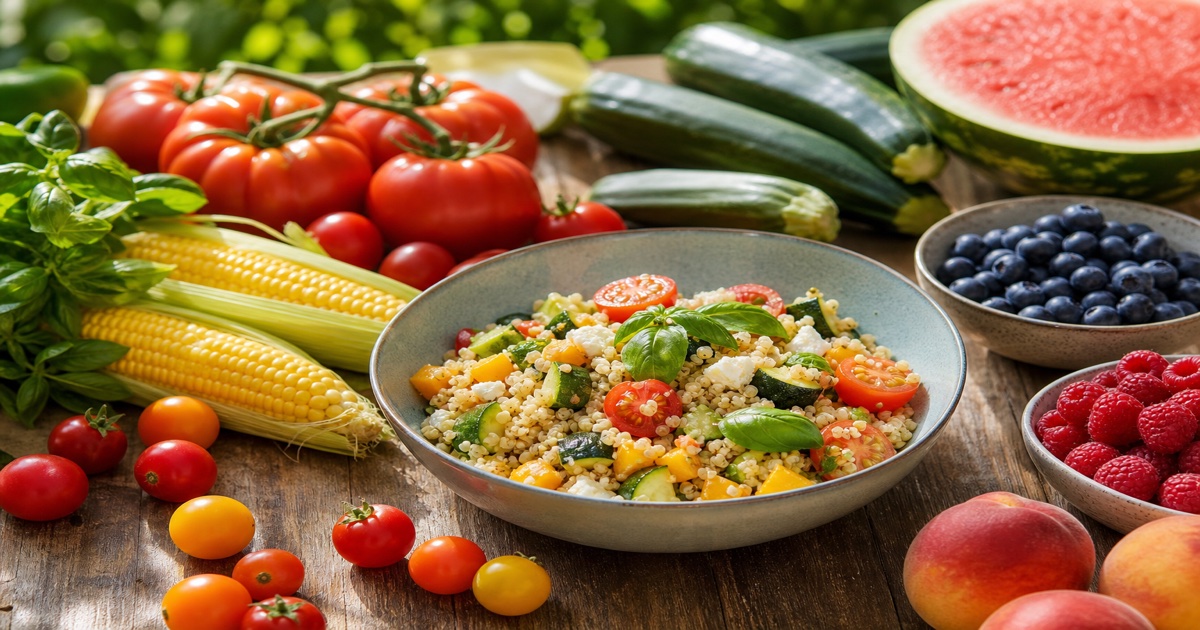
What's in season: June–August 2026
Vegetables at peak (best price, best flavor):
- Tomatoes — the headline act. Slice with salt, blister in a pan, or blend raw into gazpacho
- Corn — sweetest mid-summer; grill it, cut it raw into salads, or char for salsa
- Zucchini and summer squash — fast-cooking, endlessly swappable, great raw in ribbons
- Cucumbers — the no-cook backbone of salads, yogurt sauces and infused water
Fruit at peak:
- Berries — strawberries, blueberries, raspberries; cheapest they'll be all year
- Stone fruit — peaches, nectarines and cherries hitting full sweetness in July
- Watermelon — hydrating, cheap, and unbeatable with feta and mint
Herbs that are abundant and cheap:
- Basil, mint and dill — buy big bunches and use them across the week in salads, sauces and drinks
2026 summer food trends worth eating
The trend research lines up neatly with how you actually want to eat in the heat:
- Food-led energy — instead of caffeine and sugar crashes, people are building meals around protein plus complex carbs for steady afternoon energy. A grain bowl with grilled chicken does more for a hot day than a third iced coffee.
- Fruit-forward "sweet heat" — mango and peach paired with chili is everywhere this summer. Think peach-and-jalapeño salsa, mango-chili slaw, and watermelon with a pinch of Tajín.
- Gut-health summer — fermented sides (kimchi, yogurt, quick pickles), high fiber, and add-ins like chia are the quiet trend. Fiber and ferments keep digestion happy when you're eating more raw food and dining out more often.
How to build a heat-proof week
The mistake most people make in summer is planning seven separate dinners. Don't. Here's the framework:
- Pick 3-4 flexible dinners, not seven. Choose meals where the protein and the produce can swap based on what's cheap and what looks good.
- Repeat breakfasts and lunches. Two breakfast options and two lunch options on rotation removes 80% of the decisions without anyone noticing.
- Default to low-heat and no-cook. Grill once, use the oven early in the morning if at all, and let salads, bowls and wraps carry the rest.
- Plan leftovers into lunch. Tonight's grilled chicken is tomorrow's grain bowl. Cook proteins in a double batch so dinner does double duty.
That's the entire system. Everything below is just one good week built on top of it.
The 7-day summer meal plan
Low-heat by design — most dinners use the grill, a single pan, or no stove at all.
Monday — Grill night
- Breakfast: Greek yogurt with berries, chia and honey
- Lunch: Tomato, cucumber and white bean salad with basil
- Dinner: Grilled chicken with charred corn and a tomato-basil side (cook extra chicken)
Tuesday — No-cook bowls
- Breakfast: Overnight oats with peaches and almonds
- Lunch: Leftover grilled chicken grain bowl with cucumber and herb-yogurt dressing
- Dinner: Cold soba noodle bowl with marinated tofu, zucchini ribbons and sesame
Wednesday — Sweet heat
- Breakfast: Greek yogurt with berries, chia and honey
- Lunch: Tuna and white bean salad with tomatoes and mint
- Dinner: Fish tacos with peach-jalapeño salsa and a quick cabbage slaw
Thursday — Garden plate
- Breakfast: Overnight oats with peaches and almonds
- Lunch: Big salad with leftover fish, corn and avocado
- Dinner: Zucchini and corn skillet with eggs and feta (one pan, ten minutes)
Friday — Grill again
- Breakfast: Greek yogurt with berries, chia and honey
- Lunch: Caprese-style sandwich with tomato, basil and mozzarella
- Dinner: Grilled shrimp skewers with zucchini and a mango-chili slaw (cook extra shrimp)
Saturday — Market plate
- Breakfast: Peach and berry smoothie with Greek yogurt
- Lunch: Leftover grilled shrimp over a cucumber-tomato salad
- Dinner: Build-your-own bowls from whatever the market handed you + a grilled protein
Sunday — Prep + cold comfort
- Breakfast: Tomato toast with eggs and herbs
- Lunch: Gazpacho with crusty bread and feta
- Dinner: Watermelon, feta and mint salad with grilled sausage or halloumi
- Prep: Batch cook grains, wash produce, marinate proteins for Monday–Wednesday
Summer grocery list (grouped + swappable)
Produce
- Tomatoes (slicing + cherry), cucumbers, zucchini, corn, cabbage, avocado
- Peaches, berries, watermelon, mango, lemons/limes
- Basil, mint, dill, jalapeño
- Swap freely: any peaking vegetable for another, any stone fruit for berries
Proteins
- Chicken, white fish, shrimp, tofu, eggs, sausage or halloumi, canned tuna
- Swap freely: keep proteins no-cook or grill-friendly on the hottest days
Pantry + dairy
- Grains (rice, quinoa, soba), white beans, oats, chia, almonds, olive oil
- Greek yogurt, feta, mozzarella, honey
The whole point of grouping and swapping is that you buy what's cheapest in each group. If peaches are pricey but nectarines are stacked high, buy nectarines.
Sunday prep in under 60 minutes
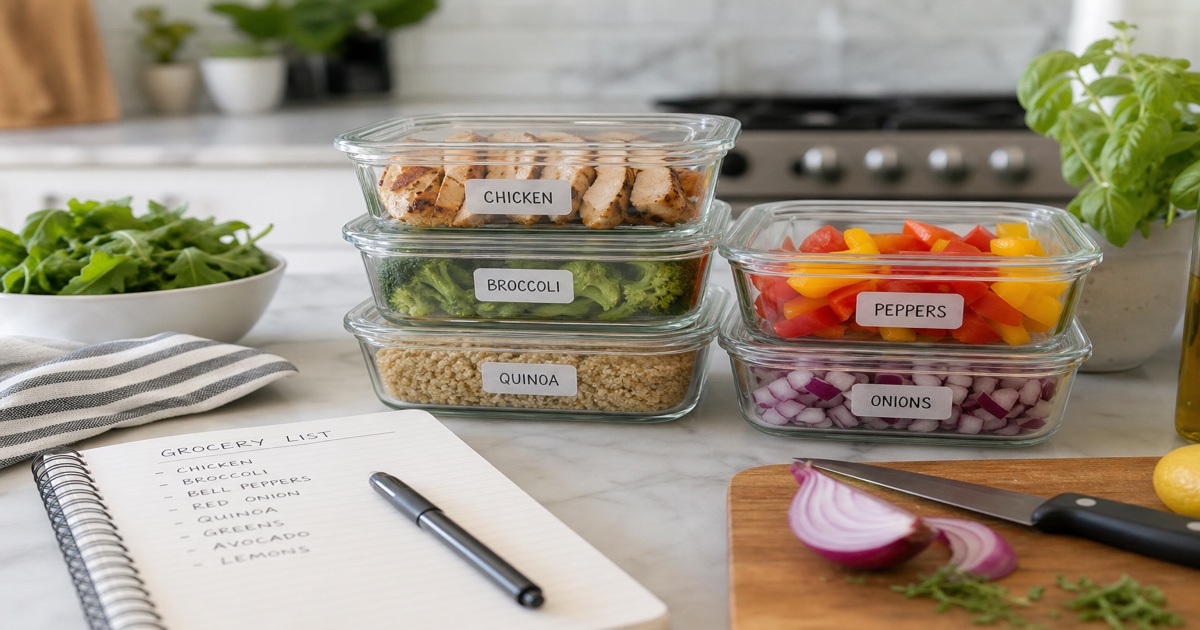
- Cook one big batch of grains (rice or quinoa) for the bowls — 20 min, mostly hands-off
- Wash and prep produce — chop cucumbers and tomatoes, ribbon zucchini, wash berries and herbs — 20 min
- Marinate proteins — chicken and tofu in two bags for the first half of the week — 10 min
- Mix two dressings — herb-yogurt and a sesame-soy — 10 min
Sixty minutes on Sunday morning (before it gets hot) means Monday through Wednesday are assembly, not cooking.
Shopping and budget strategy
Summer is the cheapest season to eat well because supply peaks. In-season tomatoes, corn, zucchini, berries and stone fruit run 30-50% cheaper than out of season — the original budget hack is simply eating what's abundant.
Two more moves stretch it further:
- Buy at the farmers market for tomatoes, corn, stone fruit and herbs — better price, better flavor, and you'll plan around the haul.
- Check real prices first. ChefSphere Community Prices shows what produce actually costs at stores near you, from real shoppers — not national averages.
How ChefSphere AI personalizes it
The hard part of summer eating isn't the recipes — it's adapting the plan to your household, your budget, and whatever the heat is doing to your appetite.
ChefSphere's AI handles it:
- Scan and cook from what you bought. Swipe for Meals turns your farmers-market haul into recipes built around those exact ingredients.
- Personalized to your taste. Swipe through summer recipes and the AI learns what you'll actually eat, then builds the meal plan around it.
- Budget-aware. Set a weekly grocery budget and the AI builds within it, prioritizing what's cheap and in season using real local prices.
- Endlessly swappable. Don't want to grill tonight? Swap the dinner for a no-cook bowl and the grocery list rebalances itself.
For a sister season, see our Spring 2026 Meal Plan, and to go deeper on produce timing, read What's in Season Summer 2026.
Related reading
- What's in Season Summer 2026 — the month-by-month produce guide behind this plan
- Spring 2026 Meal Plan — the seasonal framework for the previous quarter
- Community Prices — real local grocery prices to plan your budget
- AI Meal Plan — let the AI build your week automatically
Get started: Create a free ChefSphere account. Swipe through summer recipes and the AI builds your first 7-day plan — grocery list included — in under a minute. Download the app and beat the heat.


