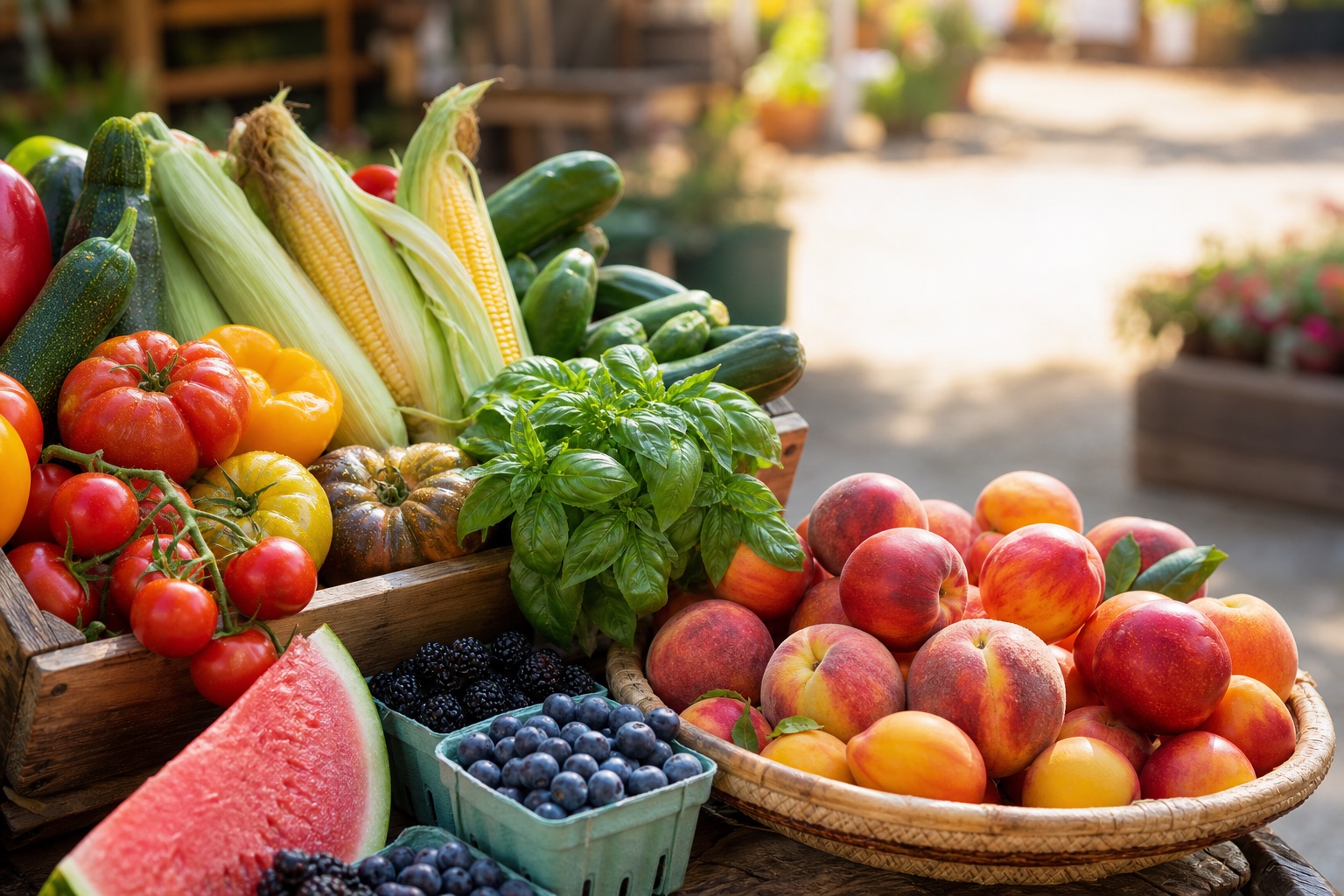
Fall produce and the September–December plan: Fall and Winter 2026 Meal Plan.
Summer is the easiest season to eat well, and it's almost entirely because of timing. From June through August the fields are producing faster than the stores can sell, which means peak flavor and the lowest prices of the year land on the same shelf. The only skill required is knowing what's at its best each month — and using it before it turns.
This is your month-by-month guide to summer 2026 produce: what's in season, what's cheapest, and a rolling plan to make sure none of it goes to waste.
Why seasonal eating wins in summer
Three things line up in summer that almost never line up at once:
- Flavor — a July tomato ripened in the sun tastes nothing like a January one shipped green. Peak-season produce simply tastes better, so you need less to make it good.
- Price — supply peaks, so prices drop. In-season summer produce runs 30-50% cheaper than out of season. Eating what's abundant is the original budget hack.
- Nutrition — produce picked at ripeness and eaten close to harvest holds more of its nutrients than the long-haul, out-of-season alternative.
When all three peak together, "eat seasonally" stops being advice and becomes the obvious choice.
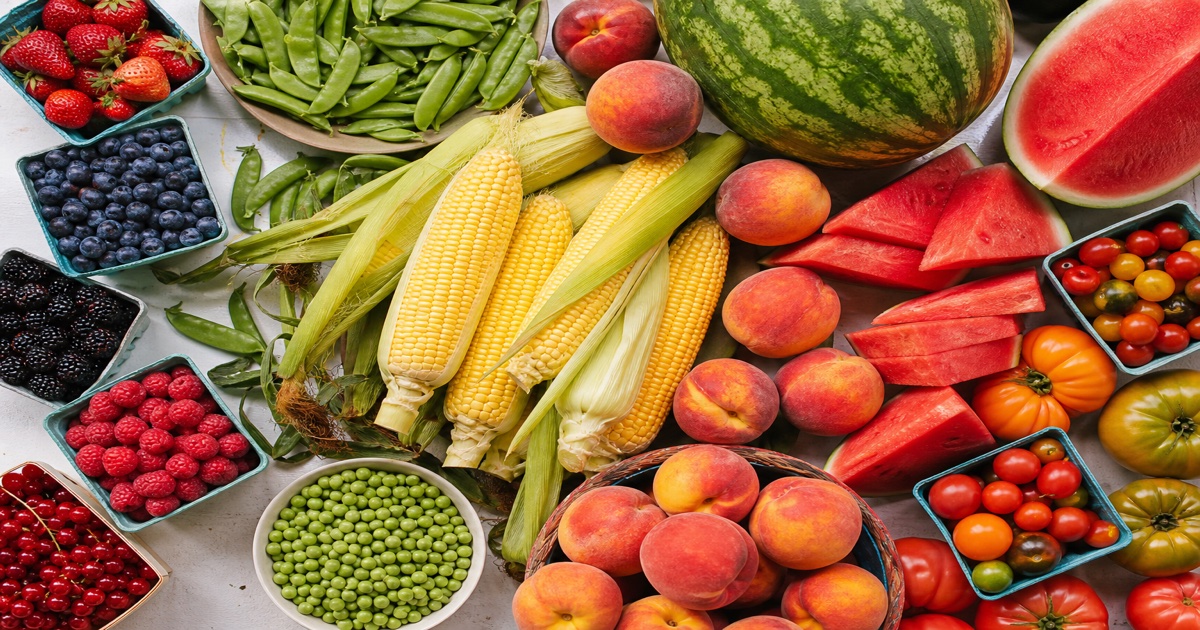
The full summer 2026 produce list at a glance
Fruit
- Berries — strawberries, blueberries, raspberries, blackberries
- Stone fruit — peaches, nectarines, cherries, plums, apricots
- Melons — watermelon, cantaloupe, honeydew
Vegetables
- Tomatoes (slicing, cherry, heirloom)
- Corn
- Zucchini and summer squash
- Peppers (sweet and hot)
- Cucumbers
- Eggplant
- Okra
Herbs
- Basil, mint, dill — abundant, cheap, and best bought in big bunches
Keep this list on your phone. It's the difference between shopping the deals and shopping the displays the store wants you to buy.
June 2026: the spring-to-summer bridge
June is a transition month — the last of spring overlaps with the first of summer. Cherries arrive, strawberries hit their sweetest, and early zucchini starts showing up cheap. Asparagus and peas are fading; tomatoes and corn aren't quite there yet.
Three quick June meals:
- Cherry and goat cheese salad — cherries, greens, toasted almonds, a splash of balsamic
- Strawberry breakfast bowl — Greek yogurt, sliced strawberries, granola, honey
- Zucchini and lemon pasta — early zucchini ribbons, olive oil, lemon, parmesan
July 2026: peak season
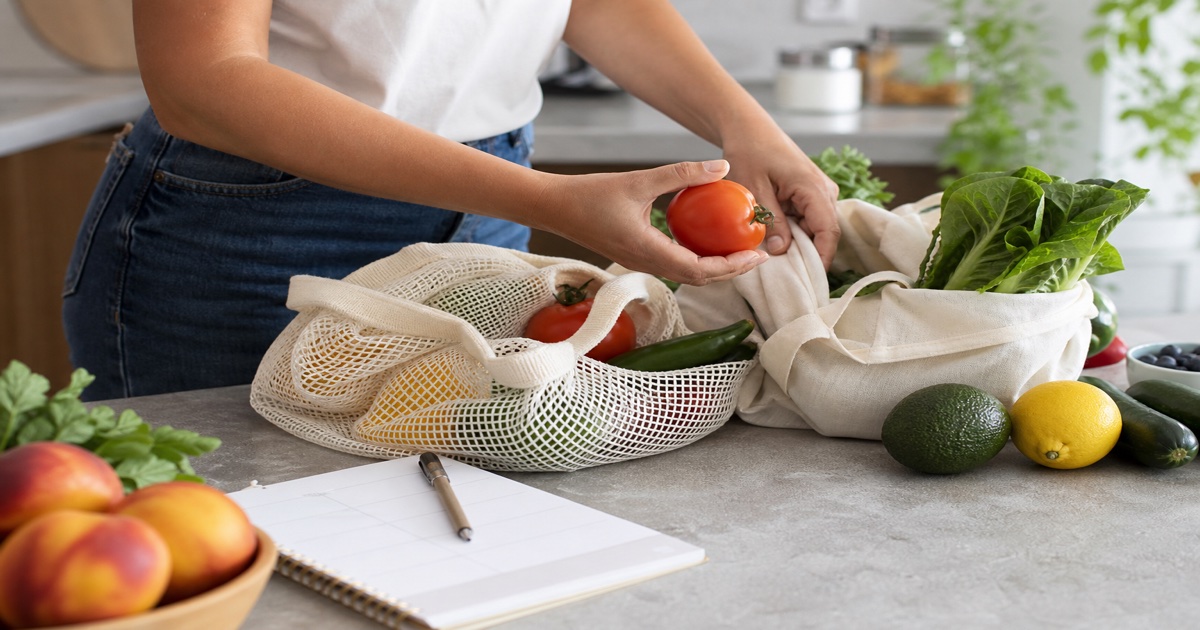
July is the high point of the whole summer. Tomatoes are fully ripe, corn is at its sweetest, and peaches reach full flavor. Berries are still going strong, and the first heirloom tomatoes appear. If there's one month to eat tomato-and-corn everything, it's this one.
Three quick July meals:
- Tomato and corn salad — ripe tomatoes, charred corn, basil, feta, olive oil
- Peach and burrata plate — sliced peaches, burrata, mint, flaky salt, crusty bread
- Grilled corn and tomato tacos — charred corn, diced tomato, lime, a soft tortilla
August 2026: overflow season
August is when the garden overflows. Heirloom tomatoes, eggplant and peppers pile up faster than you can eat them — which is exactly why August is the month to preserve. Roast a tray of peppers and freeze them, blend extra tomatoes into sauce, and salt-and-store what you can't finish fresh.
Three quick August meals:
- Ratatouille — eggplant, zucchini, peppers, tomatoes, slow-cooked in olive oil
- Stuffed peppers — sweet peppers, rice, herbs, whatever protein you have
- Heirloom tomato toast — thick sourdough, ripe heirloom slices, olive oil, flaky salt
Simple preserving: Roast surplus peppers and freeze. Blend overripe tomatoes into a quick sauce and freeze in jars. Slice and freeze stone fruit for winter smoothies. None of it takes more than 20 minutes, and it turns August's glut into food for months.
A rolling "use it before it spoils" weekly plan
The single biggest cause of summer food waste is buying more than you can cook before it turns. A rolling plan fixes that by cooking in order of perishability:
- Days 1-2 — most perishable first. Berries, fresh herbs, soft peaches, salad cucumbers. Eat them raw or in salads while they're at their best.
- Days 3-4 — sturdier produce. Zucchini, corn, peppers, firmer tomatoes. Grill, sauté, or build into bowls.
- Days 5-6 — the keepers and the batch. Eggplant, the last tomatoes, anything you turned into sauce, salsa or roasted veg earlier in the week.
- Reuse across meals. That bunch of basil goes into salad, then pesto, then a sandwich. Buying big and using everything is what makes seasonal shopping cheap.
Shopping seasonal on a budget
Seasonal produce is cheap because supply peaks — that 30-50% savings is the whole reason to plan around what's in season. Two moves stretch it further:
- Buy at the farmers market for tomatoes, corn, stone fruit and herbs. Better price, better flavor, and you'll plan your week around the haul instead of a list.
- Check prices before you go. ChefSphere Community Prices shows what produce actually costs at stores near you — from real shoppers, not national averages — so you know a good deal when you see one.
From farmers-market haul to dinner with AI
The hardest part of a great market haul is what to do with it once it's on the counter. ChefSphere closes that gap:
- Scan your haul. Open Swipe for Meals, capture what you bought, and the AI turns those exact ingredients into recipes.
- Swipe to your taste. Browse summer recipes and the AI learns what your household will actually eat.
- Build the week. The AI meal plan arranges everything into a meal plan that uses the perishables first and reuses ingredients across days.
No more staring at a crate of tomatoes wondering what's for dinner.
Build your full summer week
A produce guide tells you what to buy. The next step is turning it into seven days of meals. Our Summer 2026 Meal Plan takes everything in season here and lays it out as a full 7-day framework with a grocery list — the perfect companion to this guide.
Related reading
- Summer 2026 Meal Plan — the full 7-day framework built on this produce
- Spring 2026 Meal Plan — the seasonal plan for the previous quarter
- Community Prices — real local grocery prices to spot the best deals
- AI Meal Plan — turn your haul into a personalized week
Get started: Create a free ChefSphere account. Scan your next farmers-market haul, swipe through summer recipes, and the AI builds your seasonal week in under a minute. Download the app and let nothing go to waste.


