
Gut Health & Plant-Forward Meal Planning: A Flexitarian Framework for 2026
10 min read
Fibermaxxing — maximizing daily fiber intake — is trending on social media and backed by real nutrition science. Only 5% of Americans hit the target. Here is a practical high-fiber meal plan with 35+ grams daily.
April 16, 2026 · 8 min read · By ChefSphere Team
ChefSphere Team
The ChefSphere Team builds AI-powered meal planning tools for recipe discovery, grocery planning, and weekly meal organization. We combine nutrition science, real grocery data, and taste-learning algorithms to make weekly meal planning effortless.
ChefSphere AI builds your weekly meal plan in seconds — personalized to your taste, budget, and health goals. No credit card required.
Curated recipe discovery • AI meal planning • Available on iOS, Android & Web
Fibermaxxing is the practice of intentionally maximizing daily fiber intake — typically targeting 35-50 grams per day. It originated as a Gen Z social media trend but is backed by real nutrition science and aligned with the 2025-2030 dietary guidelines.
The new dietary guidelines recommend 25-38 grams daily, but only 5% of Americans hit that target. Fibermaxxing pushes for 35+ grams by building every meal around fiber-rich foods like lentils, beans, oats, vegetables, and whole grains.
Lentils (8g per half cup), black beans (7.5g), chickpeas (6g), oats (4g per half cup), chia seeds (10g per ounce), raspberries (8g per cup), avocado (5g per half), and broccoli (5g per cup). These are also among the cheapest foods per gram of fiber.
Ramping up too fast can cause bloating and GI distress. Increase by 5 grams per week and drink extra water. Most people adapt within 2-3 weeks. If you are on GLP-1 medication, high fiber helps prevent common GI side effects.
Yes. ChefSphere lets you set a daily fiber target, and the AI builds a meal plan that hits it while respecting your taste preferences and budget. It tracks actual fiber intake through health tracking and adjusts next week's plan if you fall short.
If you have been on TikTok or Instagram in early 2026, you have probably seen "fibermaxxing" — the movement to maximize daily fiber intake. A Datassential survey of 1,000 consumers (September 2025) found that only 12% recognized the term, but that number rose to 21% among Gen Z. More importantly, once shown what it means, 52% expressed interest in trying it.
Here is the thing: unlike most social media nutrition trends, fibermaxxing is backed by decades of evidence. The problem is not the concept — it is the execution. Only 5% of Americans meet the recommended 25–38 g of daily fiber. That is a gap so wide it represents one of the biggest nutritional failures in the developed world.
This guide closes that gap.
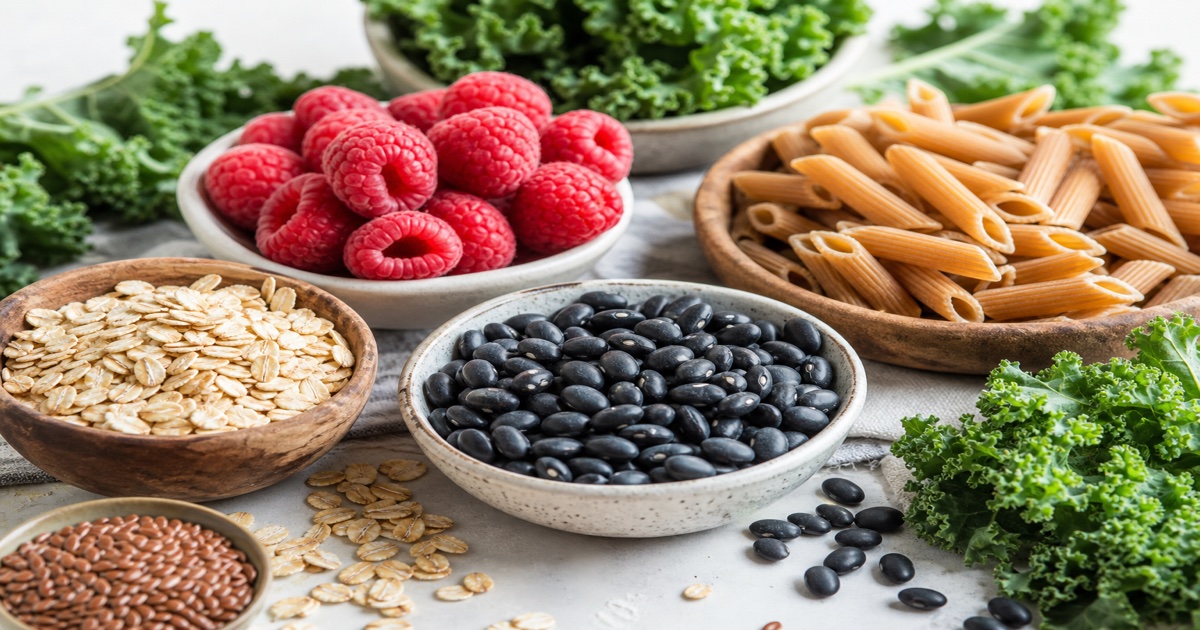
Fibermaxxing is the practice of intentionally maximizing fiber intake in every meal. The term comes from internet culture ("maxing" = optimizing a stat), but the practice is straightforward: eat more whole grains, vegetables, fruits, legumes, nuts, and seeds at every meal — not as supplements, but as real food.
The FDA defines:
Fibermaxxing aims for the upper end: 35–50 g daily, well above the minimum 25 g (women) and 38 g (men) recommended by the new 2025–2030 Dietary Guidelines.
The average American eats about 15 g of fiber per day — roughly half the minimum recommendation. Three reasons:
Fiber is not glamorous, but it is foundational:
| Food | Fiber per serving | Serving size | Bonus nutrients |
|---|---|---|---|
| Chia seeds | 10 g | 1 oz (28 g) | Omega-3, protein |
| Lentils (cooked) | 8 g | ½ cup | Protein, iron |
| Black beans (cooked) | 7.5 g | ½ cup | Protein, folate |
| Raspberries | 8 g | 1 cup | Vitamin C, antioxidants |
| Artichoke (medium) | 7 g | 1 medium | Vitamin C, magnesium |
| Broccolini | 5 g | 100 g | Vitamin C, vitamin K |
| Oats (dry) | 4 g | ½ cup | Beta-glucan, manganese |
| Avocado | 5 g | ½ fruit | Healthy fats, potassium |
| Sweet potato | 4 g | 1 medium | Beta-carotene, vitamin A |
| Almonds | 3.5 g | 1 oz (23 almonds) | Protein, vitamin E |
| Pear | 5.5 g | 1 medium | Vitamin C, copper |
| Quinoa (cooked) | 5 g | 1 cup | Complete protein |
| Cabbage (cooked) | 3 g | 1 cup | Vitamin K, trending in 2026 |
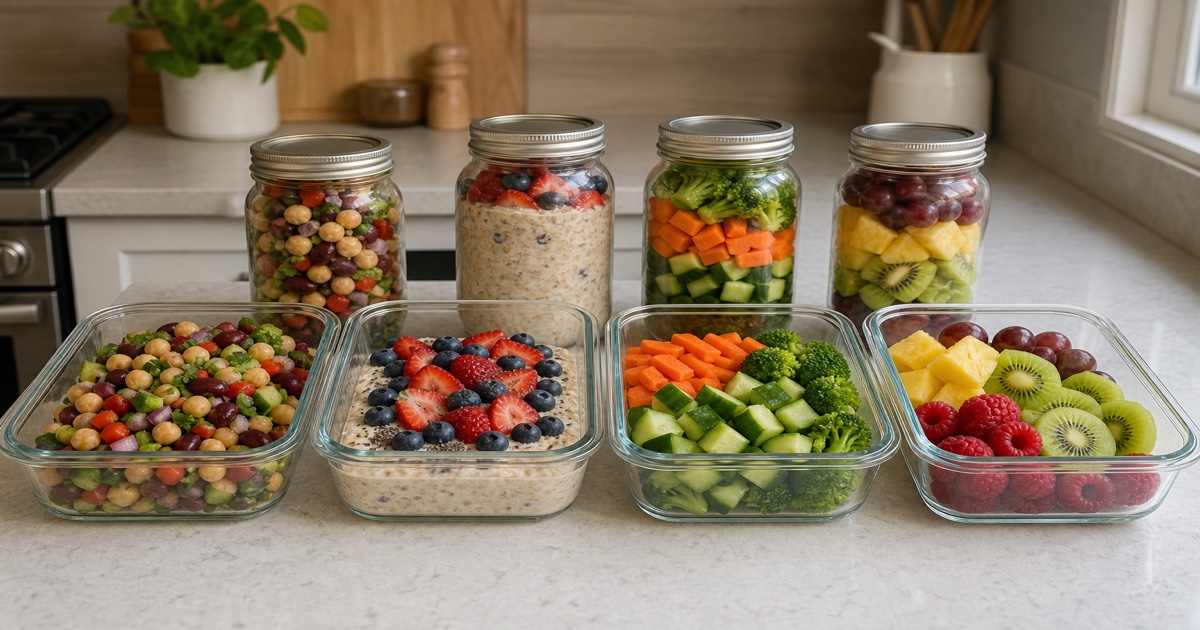
Each day targets 35–42 g of fiber from whole foods — no fiber supplements.
The reason 95% of Americans fail at fiber is not lack of knowledge. Everyone knows vegetables and beans have fiber. The failure is consistency — actually eating 35+ g every single day when life gets busy, options narrow, and the path of least resistance is a protein bar with 2 g of fiber.
This is a planning problem, and planning problems are what AI solves.
ChefSphere's AI meal planning integrates fiber targets into every plan:
The smartest nutritional strategy in 2026 combines the new protein guidelines (1.2–1.6 g/kg) with fibermaxxing. Foods that deliver both:
These are the dual-threat foods that hit both macros simultaneously — and they are all cheap.
Fibermaxxing is not a fad — it is a correction. For decades, fiber was the forgotten nutrient while protein and fat dominated the conversation. Now, the new dietary guidelines, the gut health movement, the GLP-1 drug parallel, and Gen Z's social media momentum are all converging on the same message: eat more fiber.
The gap between knowing this and doing it is a meal plan. Build one that hits 35+ g daily, adapts to your taste, and sticks beyond the first motivated week.
Get started: Create a free ChefSphere account. Set your fiber target, and the AI builds a fibermaxxing meal plan in under a minute — personalized to your taste, budget, and household.

