
Summer 2026 Meal Plan: 7-Day Framework + Grocery List
7 min read
Build a Mediterranean-style week: core foods, sample days, shopping logic, and how to personalize with AI diet planning—without turning olive oil into a religion.
April 22, 2026 · 4 min read · By ChefSphere Team
ChefSphere Team
The ChefSphere Team builds AI-powered meal planning tools for recipe discovery, grocery planning, and weekly meal organization. We combine nutrition science, real grocery data, and taste-learning algorithms to make weekly meal planning effortless.
ChefSphere AI builds your weekly meal plan in seconds — personalized to your taste, budget, and health goals. No credit card required.
Curated recipe discovery • AI meal planning • Available on iOS, Android & Web
Not necessarily. It can be moderate carb with high fiber. Traditional Mediterranean includes bread, pasta, and grains — but in smaller portions than the American standard.
No — aim for fish 2-3 times per week, legumes 3-4 times, and variety overall. Canned fish (tuna, sardines, salmon) counts and is cheaper than fresh.
Yes — emphasize legumes, dairy/eggs if included, nuts, seeds, and whole grains. A vegetarian Mediterranean diet is well-studied and nutritionally complete.
For cooking under 375F and finishing, yes — the polyphenols in extra virgin olive oil are the health benefit. For high-heat searing, a cheaper neutral oil is fine. A decent $10-12 bottle works for weekly cooking.
Mediterranean is moderate in carbs (from whole grains and legumes), high in healthy fats (olive oil), and high in fiber. Keto eliminates nearly all carbs. They share an emphasis on whole foods and healthy fats but differ on grains and legumes.
The Mediterranean diet pattern is one of the most studied eating styles for cardiovascular and metabolic health—but “Mediterranean” on Pinterest often becomes cheese boards and dessert hummus. A useful meal plan focuses on repeatable anchors: olive oil as the main fat, plenty of vegetables, legumes and fish where possible, whole grains if they fit your goals, and meat as a side actor rather than the only centerpiece.
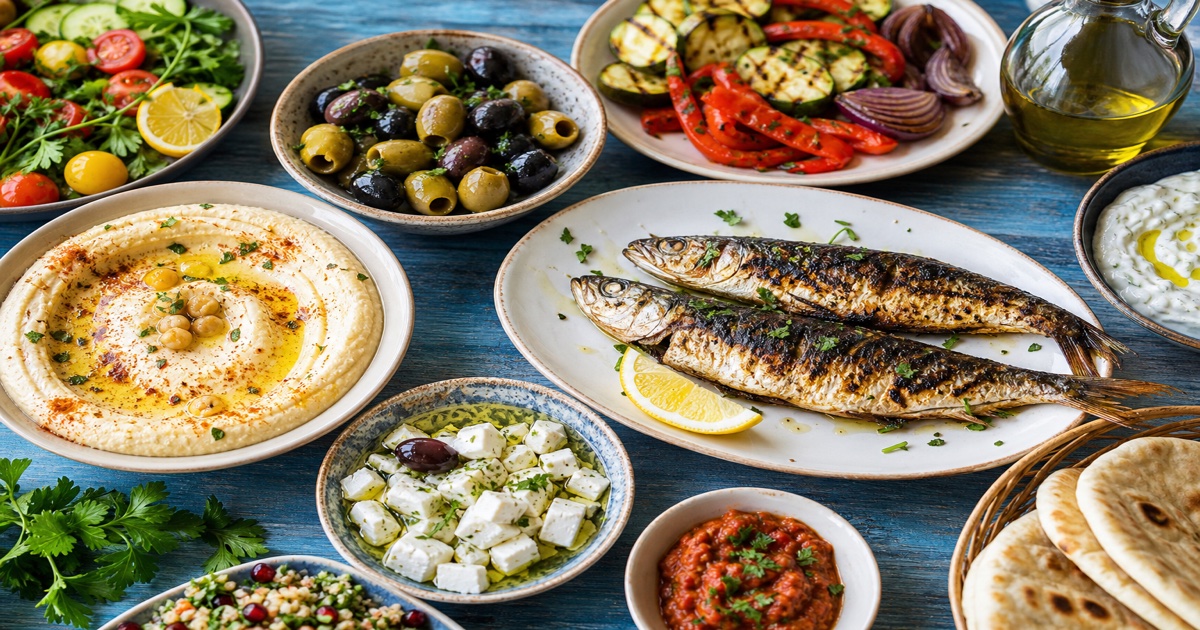
Think high fiber + unsaturated fats + lean proteins with strong vegetable volume:
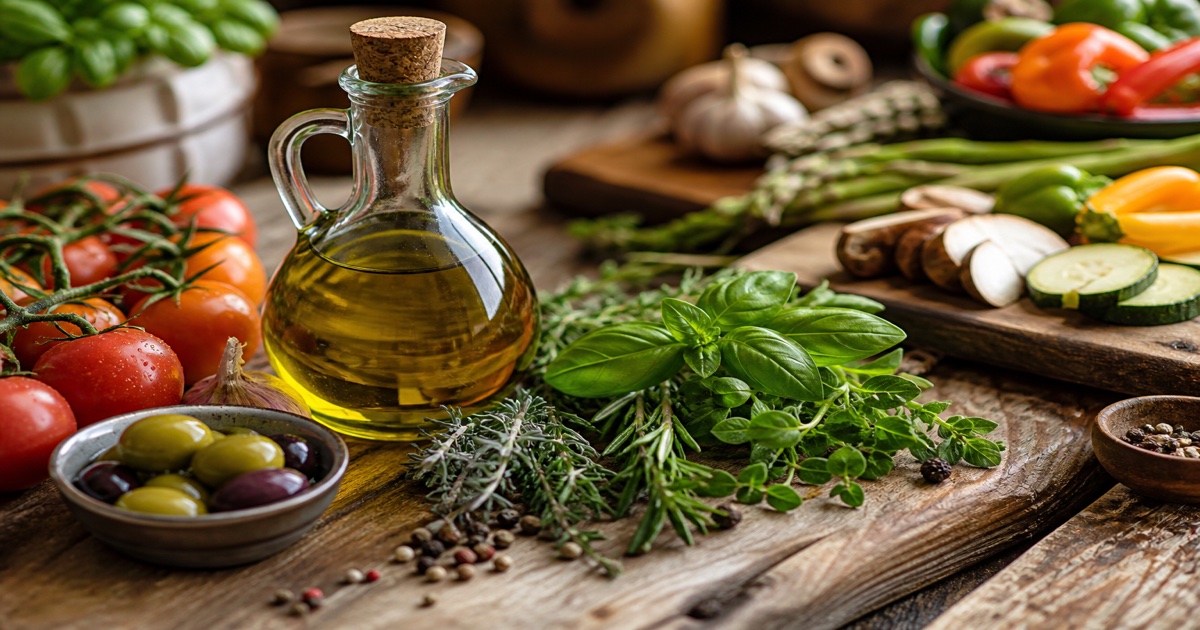
Buy two oils max for beginners: a good olive oil for finishing/roasting and a neutral oil only if you truly need high-heat frequently—many home cooks overbuy oils.
Frozen vegetables are acceptable—especially spinach and broccoli—if fresh waste is your leak.
| Category | Weekly staples | Notes |
|---|---|---|
| Fats | Extra virgin olive oil, olives, almonds/walnuts | EVOO is the core. Budget ~$8–12 for a good 750ml bottle. |
| Proteins | Canned chickpeas, lentils, salmon/cod, chicken, eggs | Legumes 3–4x/week, fish 2–3x/week |
| Produce | Tomatoes, cucumber, leafy greens, onions, garlic, lemon | Buy seasonal. Spring 2026: asparagus, broccolini, cabbage at peak. |
| Dairy | Greek yogurt (full-fat), feta, Parmesan | Full-fat dairy endorsed by 2025–2030 guidelines |
| Grains | Quinoa, whole grain bread, whole wheat pasta | Keep portions moderate — Mediterranean is not carb-heavy |
| Pantry | Canned tomatoes, tahini, za'atar, dried oregano, capers | Flavor without effort |
A Mediterranean meal plan for two costs roughly $90–120/week in April 2026, depending on fish frequency and produce seasonality. That is below the USDA moderate plan ($395–450/week for a family of four). Use Community Prices to check local costs.
The 2025–2030 Dietary Guidelines validate nearly every principle of the Mediterranean pattern:
This alignment means a Mediterranean meal plan in 2026 is not just "healthy" — it is guideline-compliant by default.
| Goal | Adjustment | Example |
|---|---|---|
| Lower carb | Replace grains with extra vegetables and legumes | Cauliflower instead of rice, bigger salad instead of bread |
| Higher protein | Add explicit protein anchors every meal | Eggs at breakfast, fish at lunch, chicken at dinner |
| Weight loss | Control olive oil portions (calorie-dense) | Measure rather than pour freely — 1 tbsp = 120 cal |
| Budget-friendly | Lean into legumes, eggs, and canned fish | Chickpea bowls, lentil soups, tuna salads |
| GLP-1 compatible | Higher protein, smaller portions, fiber-forward | Read the GLP-1 guide |
ChefSphere's diet meal plans help encode these constraints as a weekly structure rather than a one-off recipe hunt.
The Mediterranean pattern adapts well to multi-person households:

